
CNI Chairman Highlights Policy Instability and Legal Hurdles as Major Obstacles to Nepal's Economic Development
english.ratopati.com · Fri Sep 11 06:16:02 GMT 2026
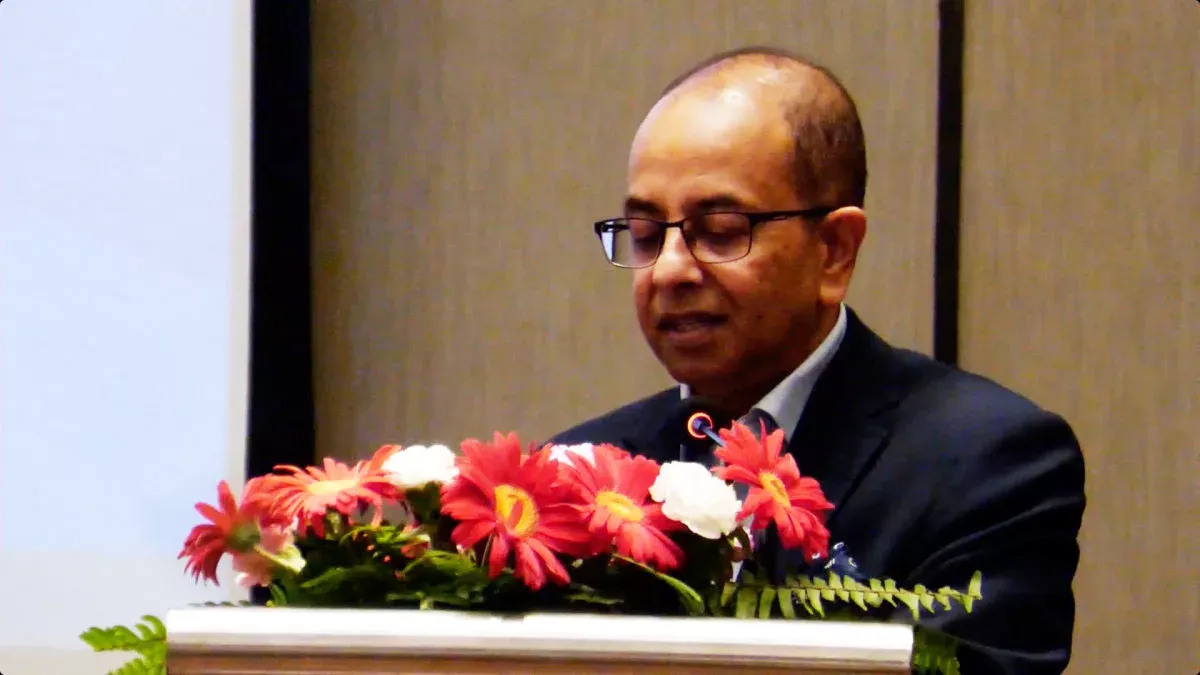
Kathmandu. Nepal Industry Confederation (CNI) Chairman Virendra Raj Pandey has stated that policy instability and legal complexities are the main obstacles to the country's economic development. Speaking at the 28th general assembly of the Economic Journalists Association of Nepal (SEJON) on Friday, he said that the cost and uncertainty of business have increased due to conflicting laws and regulations related to industrial operations. He urged Finance Minister Dr. Swarnim Wagle to abolish and amend old and irrelevant economic laws. He pointed out that increasing capital expenditure, accelerating project implementation, and improving the private investment environment are the main challenges at present. He stated that continuous monitoring of the implementation status of programs announced by the government through its policies and programs and budget, and their impact on the economy, is necessary. He emphasized the need to consider economic journalism not just as a medium for news dissemination but as an important partner for policy reform and economic transformation. He said that economic journalism has played an important role in bringing the problems faced by industrialists and businessmen and the weaknesses seen in policy implementation into public discourse based on facts. Speaking about the role of economic journalism, he said, 'Economic journalism has been bringing into public discourse, based on facts, the problems faced by industrialists, policies made by the government, weaknesses seen in implementation, market trends, and economic possibilities.' Clarifying CNI's perspective, he added, 'Therefore, CNI has been viewing economic journalism not just as a medium for news dissemination but as an important partner for policy reform and economic transformation.' Explaining the organization's working style, he said, 'CNI is continuously active as a major institution that takes the voice of Nepal's industrial and private sector to the policy-making level. We have made policy research, fact-based suggestions, public-private dialogue, and continuous advocacy for reform our working style.' Regarding efforts in various sectors of the economy, he said, 'CNI has been advancing various initiatives in areas such as industrial development, investment promotion, export expansion, production growth, employment creation, infrastructure development, digital transformation, energy, tourism, and entrepreneurship.' Clarifying the main challenges, he added, 'The main challenges at present are to increase capital expenditure, accelerate project implementation, improve the private investment environment, and create market demand. The role of economic journalism is important in this.' Speaking about monitoring policy implementation, he said, 'Not just what the government announced, but what was implemented, how much was spent, which projects moved forward, which policies got stuck, why they got stuck, and what impact they had on the economy? Continuous investigation and public debate on these questions are necessary.' Clarifying the legal hurdles, he added, 'One of the biggest obstacles to Nepal's economic development is policy instability and a complex legal structure. There are many laws, regulations, and procedures related to industrial operations in Nepal. Some laws are old, some contradict each other, and some have increased business costs and uncertainty.' Finally, Chairman Pandey said that the government's move towards abolishing and reforming old laws is positive.
Read full story at source (english.ratopati.com)