
Parliamentary Committee Directs Health Ministry to Provide Effective Treatment to Flood Victims
english.ratopati.com · Fri Sep 11 08:45:19 GMT 2026
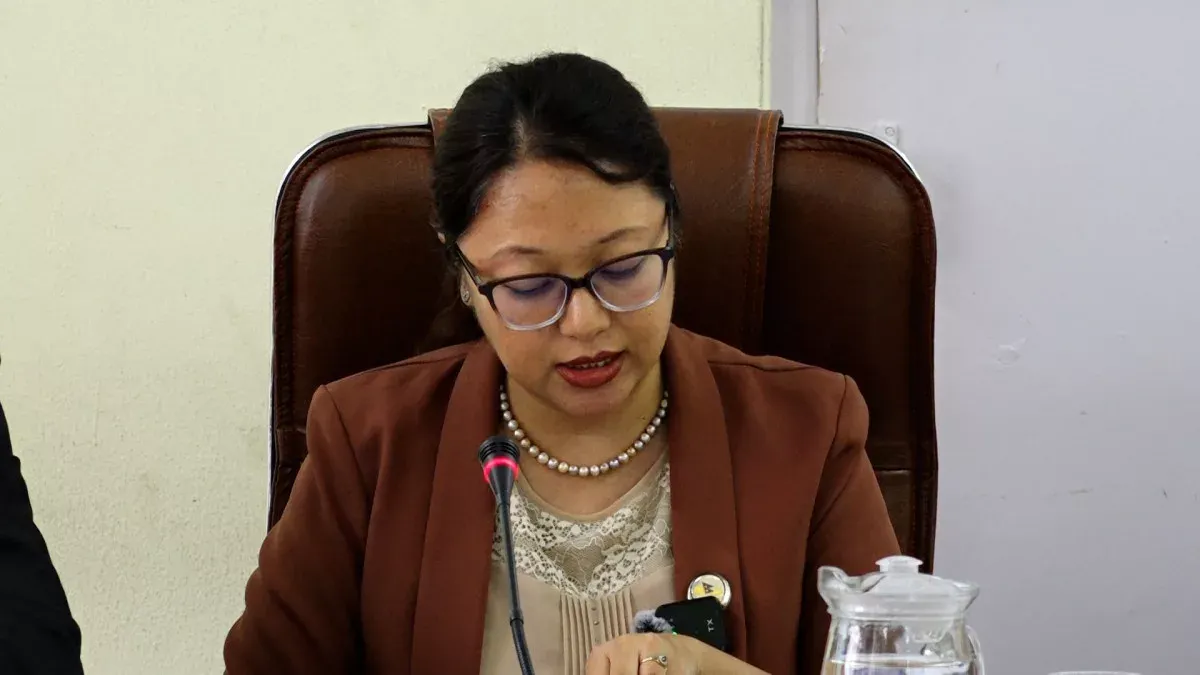
Kathmandu. The Education, Health and Information Technology Committee under the House of Representatives has directed the Ministry of Health and Food Hygiene to arrange effective health treatment for citizens affected by the devastating floods in the Bhote Koshi and Trishuli rivers of Rasuwa. The committee meeting held at Singha Durbar on Friday directed to make the mobile health services being operated for long-term patients, the elderly, women and children in the flood-affected areas more effective. Committee Chairperson Dr. Ojashwi Sherchan suggested conducting preliminary health check-ups of the affected citizens in the holding centers and determining the priority of treatment based on risk. She directed to store sufficient quantities of ORS, PPE, essential medicines and other health supplies, keeping in mind the possible epidemics in the affected areas. The committee has stated that safe drinking water, handwashing facilities, nutritious food, toilets, sanitation and waste management should be ensured, and manpower related to public health and environmental health should be mobilized for regular monitoring. The ministry has been asked to effectively operate the Epidemiology and Disease Control Division's 'Early Warning, Alert and Response System' (e-WARS) for regular disease surveillance and prompt reporting. The committee has directed to mobilize a rapid response team for immediate identification, investigation and control of possible outbreaks. It has been suggested to arrange psychological first aid and psychosocial counseling, keeping in mind the mental health problems that may arise among the flood victims. The committee has asked to ensure timely treatment of emergency patients by coordinating with nearby hospitals and ambulance services.
Speaking about the health service directives, Chairperson Sherchan said, 'Services are being provided to long-term patients, the elderly, women and children in the holding centers through mobile health service teams.' Clarifying the expansion of services, she added, 'To make this more effective, preliminary screening, priority setting based on risk, continuous supply of essential medicines along with regular medicines, and timely referral and follow-up of complex patients must be ensured.' Speaking about epidemic control and sanitation, she said, 'Keeping in mind the possible epidemics, ORS, personal protective equipment (PPE), essential medicines and other health supplies must be fully stocked.' Speaking further about management, she added, 'Safe and healthy drinking water, handwashing facilities, safe and nutritious food, toilets, sanitation and proper waste management must be ensured. For this, public health and environmental health manpower should also be mobilized and regular monitoring should be done.' Regarding disease surveillance and rapid teams, she said, 'Regular disease surveillance and prompt reporting should be done through the Early Warning, Alert and Response System (e-WARS) of the Epidemiology and Disease Control Division for early warning and response.' Adding about outbreak identification, she said, 'A rapid response team should be mobilized for immediate identification, investigation and control of possible outbreaks. Psychological first aid and psychosocial counseling should be provided in all affected areas.' Clarifying about serious mental health problems, she added, 'After initial support, treatment, follow-up and referral for problems such as post-traumatic stress disorder, anxiety, and depression must be ensured by mental health specialists. Timely treatment of emergency patients must be ensured by coordinating clearly with nearby hospitals and ambulance services.' Adding about the mobilization of mechanisms, she said, 'Effective coordination should be established between the health coordinator team, local levels, provinces and the Health Emergency Operation Center (HEOC) with clear responsibilities. Alternative services should be arranged for damaged health institutions, and restoration and reconstruction work should be carried out in a time-bound manner by setting priorities.' Clarifying about the handover of bodies, she added, 'It has been decided to direct the Ministry of Health and Food Hygiene to effectively coordinate between the Nepal Police, Forensic Science Laboratory, Ministry of Health and related bodies to ensure the dignified management of the deceased, scientific documentation and DNA testing of unidentified bodies, and timely handover to the families.' Chairperson Sherchan has also directed to effectively coordinate between the Nepal Police, Forensic Science Laboratory, Ministry of Health and other relevant bodies to ensure the dignified management of those who died in the flood, scientific documentation and DNA testing of unidentified bodies, and timely handover to their families.
Read full story at source (english.ratopati.com)