
Man Achieves Success Through Street Food Vending
english.ratopati.com · Fri Sep 11 09:45:00 GMT 2026
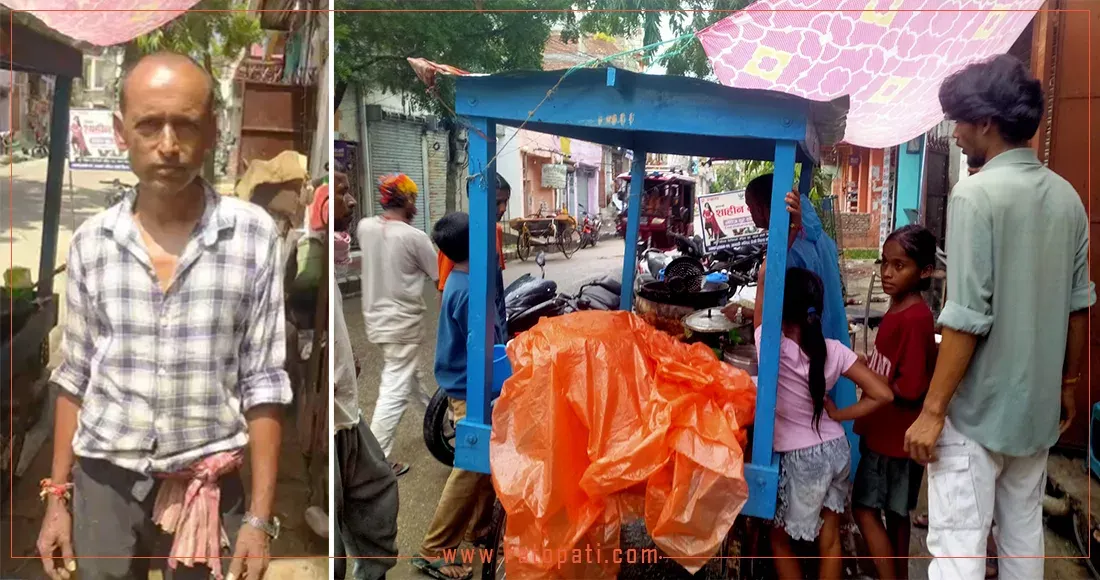
Janakpurdham. Shyam Prasad Sah, 52, of Dhanusha Path, Janakpurdham Sub-Metropolitan City-11, can be a source of inspiration for the youth generation who are struggling to be self-reliant. By selling indigenous snacks from a simple four-wheeled cart, he has made his elder son a civil engineer, and his younger son has also completed his diploma. Sah got his two daughters married with fanfare. He has also constructed a 3-story concrete house on his small ancestral land. The source of income for all this is the snack shop he operates from his cart. Sah has been operating his snack shop from a cart like this for two and a half decades. His day starts at 4 in the morning. He spends time on this business until late at night. Selling puri, tarkari, bhaja, chola, kachari, pyaji from his cart, he does business worth an average of 8-10 thousand rupees daily. He says that he earns a good profit from it. Sah couple wakes up at 4 in the morning and gets busy preparing breakfast for the customers. Together, they knead dough for puri and cook cauliflower, gourd, boiled potato mixed tarkari with soaked legumes from the previous evening. They make pakoda (kachari) by frying onions, chilies, etc., in gram flour batter. Sah said that it takes about 3 hours in the morning to prepare all this. After all the preparations are done, they are ready to serve snacks to customers from 7:30 AM. He does his daily snack business from a small cart placed on the road in front of his own 3-story house, where customers flock to eat hot puri and tasty tarkari. Breakfast includes 5 puris, tarkari, 2 kacharis, and mango pickle prepared by himself. Sah is busy serving snacks to customers and taking money, while his wife Anjali is busy cooking puris. Anjali said, 'Earlier, the daughters used to help with the work. Both daughters got married. Now we have to do all the work ourselves.' Sah said that his elder son is a civil engineer. 'Now he teaches students equivalent to diploma level,' he said. He said that his younger son has just completed his diploma. He said that they will continue this business as long as their hands and feet are functional. Sah said that both his sons help him with the business when they come home. 'They know very well that their parents studied and brought them this far by doing this work,' Sah said, 'That's why they respect the work. When they come, I don't do much work. They themselves do tasks like washing plates and serving snacks to customers.' From 3 PM, another menu of snacks is prepared at their shop. From afternoon until evening, Sah prepares items like bhaja, chola, litti, pyaji, badi, kachari as snacks. 'In the evening snacks, most people prefer litti made by mixing gram flour filling inside wheat flour and chola,' Sah said, 'All the litti are sold out by 6 PM. They also take evening snacks packed.' He said that even during the day, it is not possible to rest for a while. He said, 'We have to procure so many ingredients for the breakfast items that the old couple doesn't get a moment's rest. If the son and daughter come, we get some rest, otherwise, we have to work hard like this all the time.' According to Sah, his father also did this business. He himself, being moderately educated, spent 3 years in Malaysia for foreign employment due to peer influence in his youth. Seeing that the earnings were not significant, he returned after three years. Then he decided to continue the business his father was doing. 'After continuing the snack shop, I didn't face financial hardship. I feel that if I had stayed abroad, I might not have achieved what I have achieved here,' he said. He has built a 3-story concrete house on a plot of land measuring less than a quarter of a dhur, which many find unusual. 'I could have saved some land, but this land is ancestral property. So, I built a house on the land I have,' Sah said. According to Sah, the two and a quarter dhur land earned by his father was divided among three brothers at the rate of three-quarters of a dhur each. He is not very attached to material possessions. 'As long as there is no difficulty in eating and living,' he said, 'I felt it was better to spend on my children's education than to accumulate houses, land, or jewelry. I worked hard to educate them. Now the younger son will also get a job. The elder son is already standing on his own feet. For me, this seems like success.' Sah mentioned that his wife has developed some problems in her waist and knees due to working continuously at the same pace from her youth until now. 'If that gets cured, my heart will be happy. I am planning to get my elder son married this coming January-February,' he said. Sah said that the idea of going abroad due to unemployment in the country is wrong. 'If you work hard, there are many ways to earn money. If you do business with small investments with sacrifice, dedication, and complete honesty, you can achieve success even from here,' he said. 'If you work with enthusiasm, skill, and self-confidence, you can achieve success in your own country.' He said that his wife also has a significant support and contribution to his success.
Read full story at source (english.ratopati.com)