
Madhesh Province Faces Severe Water Crisis, Study Reveals
english.ratopati.com · Mon Aug 03 09:56:22 GMT 2026
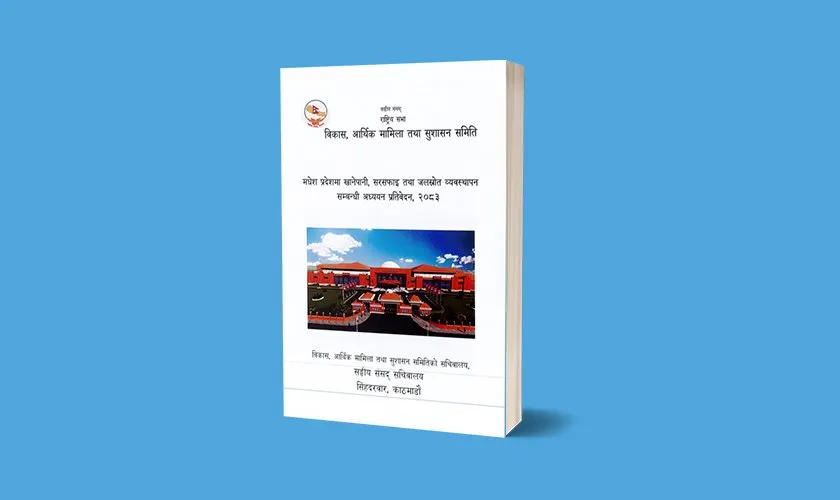
Kathmandu. The Development, Economic Affairs and Good Governance Committee of the National Assembly has released a detailed study report on the serious crisis of drinking water, sanitation, and water resource management seen in Madhesh Province. The report concluded that groundwater levels in Madhesh have alarmingly decreased, adversely affecting overall life and the agricultural system. The report mentions that rainfall has been decreasing in Madhesh Province for the past few years, and groundwater levels have been continuously declining. With the water table dropping by an average of two to three meters, more than 60 percent of hand pumps in the province have dried up. In some places like Hanspur in Dhanusha, as much as 90 percent of hand pumps have dried up. The report highlights the alarming situation where water levels in the western districts of Madhesh have dropped by more than three meters. The main causes attributed to this crisis are the destruction of the Chure region and climate change. Deforestation, haphazard land use, and uncontrolled extraction of riverbed materials (gravel-sand) have severely impacted the natural recharge process. Additionally, the crisis has deepened due to the excessive exploitation of groundwater for irrigation and industrial purposes. It is estimated that around three thousand six hundred seventy-five million cubic meters of water will be deficient in the 2025 drought. The water scarcity has had a significant social and economic impact in Madhesh, with women, children, and marginalized Dalit and Musahar communities being the most affected. Children's school attendance has decreased due to spending hours fetching water. Women have also lost livelihood opportunities. Quoting a UNICEF study, the report states, 'Due to water scarcity, some families are forced to defecate in the open again as they cannot use their toilets.' In Madhesh, which was declared open defecation-free in 2019, water scarcity poses a major challenge to this campaign. Lack of sanitation also increases the risk of diseases like cholera and diarrhea. The committee stated that government efforts to solve the problem have not been effective. There is a severe lack of coordination between local, provincial, and federal governments. Most drinking water projects are stalled due to budget shortages and lack of maintenance. In times of crisis, the government has only adopted short-term measures like distributing water via tankers. The report concludes that such immediate and relief-oriented responses alone will not provide a long-term solution to the problem. The committee has provided immediate, medium-term, and long-term suggestions to the government to solve the crisis. Emphasis has been placed on developing a clear strategy to transform from emergency relief to climate-resilient water security. The committee has suggested strict regulation on the conservation of the Chure-Bhawar region, development of water recharge systems, and deep boring. The report states, 'The ban on illegal deforestation and uncontrolled sand-gravel extraction in the Chure region must be strictly enforced.' The committee further suggested, 'It is mandatory to establish a regulatory mechanism to stop the uncontrolled exploitation of groundwater.' The committee has also drawn the attention of the concerned bodies to promote the conservation and maintenance of traditional ponds and rainwater harvesting technologies.
Read full story at source (english.ratopati.com)