
Elderly Couple Jumps into Sun Koshi River, Highlighting Healthcare System Failures
english.ratopati.com · Sun Aug 09 06:36:13 GMT 2026
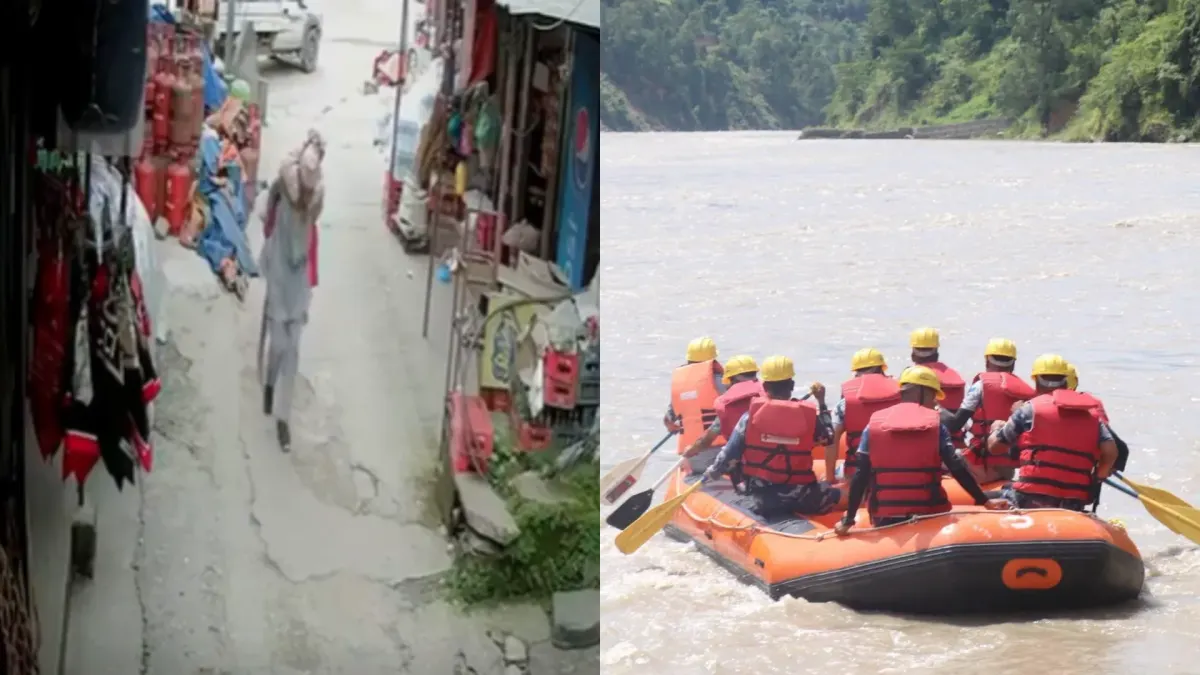
On the 20th of Shrawan, 68-year-old Kedarnath Parajuli and his 67-year-old wife Tilkumari Parajuli from Mandandeupur Municipality-7 ended their lives by jumping into the Sun Koshi River near the Duleshwor Mahadev Temple in Bhumlu Rural Municipality-8, Kavrepalanchok. Tilkumari was disabled due to bone marrow cancer. A video footage of the husband carrying his sick wife on his back through Dolalghat market before they jumped into the river has gone viral. It would be a grave mistake to understand this as merely a suicide or a personal family tragedy. This was the citizen's final disillusionment with the state and a tragic end to their existential crisis. In Asar 2079, a photograph and news published in various media outlets showed the brutal face of Nepal's health system. The news showed Khadke Nepali from Triveni Rural Municipality, Rukum West, who had mortgaged his land and taken a loan of five lakh sixty-five thousand rupees at a high interest rate from a moneylender to treat his cancer-stricken wife, Belamata Nepali, and had also shown a promissory note stating that the amount would be recovered from his land and property if not repaid with interest by the 29th of Kartik of the same year. For poor families, treatment had become a question of debt, interest, property, and ultimately existence, rather than a means to save a life. The compulsion to find money for treatment by signing papers was such that being sick was like an economic crime. The family had to pay the penalty by losing their debt, property, and future. Meanwhile, news was being published about the state treasury spending lakhs and crores of rupees for the treatment of the President, Vice President, Prime Minister, ministers, and leaders. If treatment is like a right for some in the same state, and others have to face the risk of losing property and ultimately death due to debt, then what kind of social justice does such a state have? The question is not only serious but also extremely complex. If a person mortgages all their property for their wife's treatment, sells it off, and another elderly couple jumps into the Sun Koshi with their wife, doesn't this show the helplessness of our state? For the poor, health problems are not limited to the disease; it has made their economic status almost a crime and is reconfirming poverty as if it were an innate curse. Here, instead of a comparative study of the plight of two families, an attempt is being made to present a social X-ray report of our Nepal's health system. If a person mortgages all their property for their wife's treatment, sells it off, and another elderly couple jumps into the Sun Koshi with their wife, doesn't this show the helplessness of our state? We have read in the media. Some are forced to wait for a tragic death at home, with various body parts decaying due to lack of primary treatment. Some, even after reaching the hospital, cannot afford the treatment costs and are unable to claim the bodies of the deceased. Some flee without taking the bodies, rather than paying the treatment bills. Some have committed suicide by jumping from the hospital roof after seeing the bill for their children's treatment. Such countless heartbreaking incidents, scenes, and scenarios are mocking our country's parties, leaders, ministers, prime ministers, president, and the entire state system. Here we must ask an uncomfortable question: if a person reaches the river due to inability to afford treatment, is it their personal failure or the failure of the state system? Should citizens fight against the disease or against the cost of treatment? There can be many reasons for the decision to jump into the river with family. Mental pain, financial crisis, family helplessness, social pressure, etc., but when the treatment cost of a cancer-stricken citizen exceeds the family's financial capacity, and getting treatment means risking the house, land, debt, and future, a serious structural question arises. Is healthcare a citizen's right or a commodity to be bought in the market? The constitution guarantees the right to live with dignity; citizens are pushed to the point of abandoning life due to the burden of treatment costs. This contradiction shows the character of the state of Nepal. The Constitution of Nepal clearly answers this. Article 35 of the constitution states that every citizen has the right to receive basic health services free of charge from the state and the right to equal access to health services. However, such incidents show how wide the gap is between the constitution on paper and the lives of citizens. The constitution calls health a fundamental right; citizens have to knock on the doors of moneylenders for treatment. The constitution calls for equal access; citizens' access is determined by their income. The constitution guarantees the right to live with dignity; citizens are pushed to the point of abandoning life due to the burden of treatment costs. This contradiction shows the character of the state of Nepal. The character of the state is not only seen in parliament, Singha Durbar, and government announcements. The true character of the state is revealed when a poor citizen stands at the hospital counter and says, 'I don't have money, please treat me.' What does the state do? Does the state guarantee rights to its citizens, or does it see them as customers? This is where Govinda KC's Satyagraha is understood. To understand Dr. KC's struggle merely as opening a medical college, setting seat quotas, or appointing a person is to escape the fundamental question of health justice. His Satyagraha's main demand and intention were/is that health and medical education are not commodities of the market but public concerns and the state's responsibility. If medical education becomes expensive, unequal, and commercialized, the healthcare produced from it will also ultimately be expensive and unequal. If medical education is accessible only to a limited economic class, it will affect the distribution of doctors, the nature of health institutions, and the cost of treatment. This is why Dr. KC's demands gradually expanded from medical education to the question of health justice. It reached the issue of overall good governance of the country. It is wrong to view Govinda KC's hunger strike as the personal stubbornness of a doctor. It was actually a citizen's Satyagraha to remind the state of its constitutional obligations. The irony is that a doctor has to repeatedly put his life at stake to remind the state of what is written in the constitution, yet healthcare and education have not become a matter of citizens' access and rights. Why should the Parajuli couple's decision hurt us? The Parajuli couple's water samadhi touches us most deeply. A person can be poor. They can take loans. Their house may be weak. Their income may be low. But when they fall ill, shouldn't they at least have the assurance that 'the state will not let me die, the government is my guardian for my health security'? Medicine, treatment, health insurance, specialist services, treatment for fatal diseases and other illnesses, emergency services – the state cannot be considered to have fulfilled its constitutional duty by leaving all these solely to market rules. Because poor citizens cannot compete with the market. Their income is not compared with their illness. A person battling various fatal diseases needs medicine, hospitals, doctors, and money. But along with that, they also need hope. That hope is the profound feeling of having their government. When the cost of treatment makes even hope unaffordable, it is not just the disease that kills people; the system also kills their hope. It murders their hope. The decision for water samadhi in Sun Koshi is not just a private tragedy of a couple. It is a question posed to the collective conscience of all of us. It is a tragic example that constantly pinches our human conscience. What kind of society have we built, where people find it harder to fight the cost of treatment than the disease itself? What kind of state have we built, where citizens can read about the fundamental right to health in the constitution, but that same right is lost in practice when they cannot afford the hospital bill? This is not just a question of death, but a question of the state's character. If the state is welfare-oriented, it must stand by its citizens in their weakest moments. The state's presence in healthcare should be seen not only in hospital buildings but also in the citizens' ability to afford treatment. Medicine, treatment, health insurance, specialist services, treatment for fatal diseases and other illnesses, emergency services – the state cannot be considered to have fulfilled its constitutional duty by leaving all these solely to market rules. Because poor citizens cannot compete with the market. Their income is not compared with their illness. Fatal diseases do not ask. Cancer does not ask – how much money is in your bank account? Kidneys do not ask – are you rich or poor? Hearts do not ask – which class do you belong to? Lungs do not ask – are you from Mechi or Karnali? Accidents do not ask – are you going to do good deeds or sins? Diseases do not read a citizen's social status before entering the body. But if our health system asks for a citizen's economic status at the door of treatment, the problem lies there. The logic of the market says – those who can pay get the service. The logic and practice of a welfare state should say: those who need treatment should get treatment. The distance between these two perspectives is the distance of health justice. The constitution promises social justice, equality, a life of dignity, and access to basic services. The fundamental right related to health gives the state even clearer responsibilities. But if a citizen reaches the river with their family because they cannot afford treatment, we must look at whether the spirit of the constitution, not just its letter, has failed. It is not enough to close the file by calling such incidents 'tragic suicides'. We must read the social destiny hidden within them. We must read the poverty within them. We must study how the citizen's trust in the state has been eroded within them. Another thing is that we must read the question that Dr. Govinda KC has been writing on his body for years. Dr. KC has been repeatedly reminding the state of this very thing. Health is not a trade, it is a citizen's right. Medical education is not just a business, it is the foundation of public health. And equal access to healthcare is the state's responsibility. His movement's demands have consistently included issues such as government medical colleges, fee control, medical education reform, and expansion of healthcare access. Today, a tragic decision from the banks of the Sun Koshi has again asked the same question. Govinda KC, with his old and frail body, has sat on hunger strike for the 24th time (more than 280 days) to question the state, to warn it, and to put his life at stake to remind it of its constitutional obligations regarding health and education. Is health a citizen's right or a commodity of the market? The fate of the Parajuli couple has made that question even more dire. If health is a right, why did citizens have to choose death due to lack of treatment? Why did citizens not trust the new government with a new mandate? Why couldn't a distressed citizen feel the social security of having a state and a government that would ensure they wouldn't die prematurely? The current government should take such tragic fates as an opportunity to review the health and education policies practiced so far. From a sociological perspective, the water samadhi of the Parajuli couple or the promissory note taken by Khadke Nepali for treatment are not merely accidental or purely private incidents. Behind these incidents lies structural violence created by poverty, disease, economic insecurity, unequal access to healthcare, and the state's weak social security mechanisms. It is necessary to determine the immediate cause of death; but it is no less important to determine its social cause. Because the death of a person may not be just the final point of their personal destiny; it carries the question of how far their trust in society, the state, and institutions has been eroded. The answer to the declining trust and faith of citizens in the state and government today must be given not by a family, but by the state. Because what flowed in the river were not just two bodies. They were our human conscience, the state's responsibility, and the wrong policies and practices taken towards citizens' health. What flowed in the river were not the bodies of two elderly couples, but faith in the constitution, trust in the state, and the ethics of the welfare society we have built. In the decision of the Parajuli couple, we should not just shed tears seeing the pain of a family. We should identify the political and social causes of that pain and stand at a point where we can question the state's health policy again. We must strive to find the right solution to the problem and resolve it as soon as possible. Otherwise, we will only be counting Govinda KC's Satyagrahas, not listening to them.
Read full story at source (english.ratopati.com)