
National Pride Projects Face 10-Year Delay, Study Finds
english.ratopati.com · Mon Aug 10 09:29:21 GMT 2026
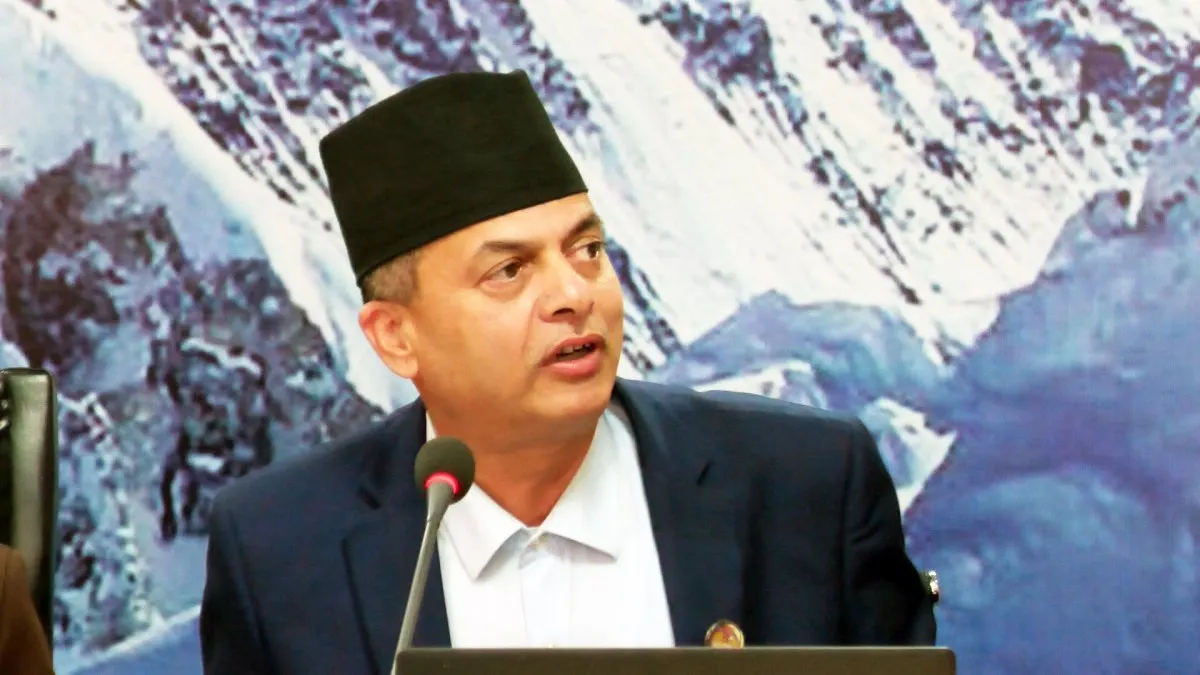
Kathmandu. If the construction work of national pride projects continues at the current pace, it will take at least another 10 years to complete them. This conclusion has been reached by a study report prepared by the National Pride Projects Study Subcommittee under the Infrastructure Development Committee. The subcommittee's coordinator, Shriram Neupane, informed that the work on national pride projects has not been completed on time due to various policy problems including budget source assurance, land acquisition, tree felling, and limited working hours. The committee has prepared a report with suggestions to expedite the completion of national pride projects. Neupane stated that if the work progresses by implementing the suggestions given in the report with necessary legal and administrative reforms, the projects can be completed within 3 to 5 years. He mentioned that even after about 15 years since the start of construction of national pride projects, the average progress is only about 55 percent. According to him, the progress of 15 national pride projects ranges from about 20 percent to 70 percent. He informed that even for projects with good progress, the annual progress is at most about 5 percent. Neupane stated that if this rate continues, it will take a minimum of 10 more years to complete the projects. Out of 17 national pride projects, the Upper Tamakoshi Hydropower Project has been completed, while the West Seti Hydropower Project has not yet started construction. "It has been about 15 years since the start of construction of national pride projects," he said, "When it started 15 years ago, the estimated cost of a minimum national pride project budget was 35 billion, while the highest was over 100 billion. Fifteen projects ranging from 35 billion to over 100 billion have now shown progress of completion up to about 70 percent." Neupane said that there are also projects with a minimum of 20-25 percent progress, and on average, only 55 percent of the work has been completed. "If these 15 national pride projects continue to work at the current pace, it seems they will not be completed even in 10 years," he said. He added that even for projects with good progress, the annual progress is at most 5 percent, and if this progress rate continues, it will take another 10 years. However, he claimed that although some projects are in a state of completion within 6-7 years, if the suggestions in the report are implemented, all projects can be completed within 3 to 5 years. The subcommittee has identified land acquisition, forest and environmental approvals, budget assurance, contractor, and contract management as the main obstacles among the major problems seen in national pride projects. Neupane said that the problem of land acquisition and compensation distribution is seen in almost all projects. He stated that a separate legal arrangement is necessary for land acquisition for development projects. Informing that a suggestion has been made to create a separate act for public and private land management, he said that the current arrangement of acquiring land through a district committee chaired by the Chief District Officer is not effective. He stated that a separate arrangement with a fast, transparent, and clear standard is necessary for land acquisition for project purposes. "The main reason for the delay in all projects is land acquisition," Neupane said, "A Public and Private Land Management Act needs to be created, which will give legal validity to land acquisition, make it easier, and provide a separate arrangement for acquiring land quickly and efficiently." He clarified that currently, based on other acts, there is a land acquisition committee chaired by the Chief District Officer (CDO), and the CDO finds it difficult to manage everything. He emphasized the need to create transparent standards as there is no separate law and standard for land acquisition for development projects. The subcommittee's conclusion is that another major problem in project construction is the delay in forest and environmental laws and approval processes. Neupane said that the projects have been stalled for a long time due to tree felling and Environmental Impact Assessment (EIA) approvals, especially in hydropower projects. He proposed bringing a 'sunset act' and declaring a 'decade of development' for a certain period to accelerate development construction. He argued that through such a legal arrangement, legal processes that hinder development projects can be simplified or suspended for a certain period. Neupane said that although Nepal has a large forest area, it has not been able to derive economic benefits from it. According to him, although forest areas constitute about 46 percent of Nepal's total land area, the contribution of forest areas to the Gross Domestic Product (GDP) is only about 3.5 percent. Stating that the approval process for tree felling in hydropower production is also causing obstacles, he expressed the view that forest conservation and energy development should be pursued in coordination rather than as opponents of each other. "Forest and Environment Act is the second obstacle and hindrance, the delay in tree felling and IEE-EIA approval process in every project is extremely cumbersome," he said, "Especially the energy sector and hydropower projects are greatly affected by this act. This problem is also seen in national pride roads and highways." He said that although it is said that 'green forest is Nepal's wealth', its contribution to GDP is only 3.5 percent, so it cannot be considered wealth. "India and China have 22-23 percent and the world has 32-33 percent forest area. We have 46 percent forest area, but our contribution to GDP is less than half of theirs," he said. He said that we have not been able to benefit from the forest sector in terms of GDP, nor have we been able to accelerate development construction. "Our main source is hydropower, but forests are becoming an obstacle to maximizing its benefits," he added, "A sunset act is necessary to improve this situation. We need to declare a decade of development for at least one decade." The subcommittee has identified the assurance of budget and non-payment on time in projects as the third major problem. Furthermore, Neupane said that the lack of experience and skills of construction entrepreneurs and government weaknesses in contract management have also become obstacles to project progress. He stated that there are legal and practical problems in the process of awarding a new contract after the contract with non-performing construction entrepreneurs is terminated. Giving the example of the Sunkoshi-Marin Diversion project, he said that there is a need for legal clarity on the issue of new construction entrepreneurs entering the project site after the contract is terminated. The subcommittee has also identified the management of construction materials as a major cause of project delays. Neupane said that there is a problem of obstruction of construction materials like gravel and sand from the local level and construction entrepreneurs being unable to manage the necessary materials. He informed that the work of the project is being affected because the materials are stopped at customs due to customs and tax related procedures when importing machinery and construction materials. The subcommittee's conclusion is that there are also problems in the selection of project chiefs and manpower, selection of machinery and equipment, inter-agency coordination, and coordination among the three tiers of government. The subcommittee has also stated that there are complexities in resolving disputes between projects, construction entrepreneurs, consultants, and intermediaries. Neupane said that some projects reach the mediation level, and some get stuck in lawsuits for a long time. He stated that there is a lack of clear laws and standards regarding design changes, variations, time extensions, price increases, and contractor claims settlement. He said that although the existing laws are in place, their implementation is weak. Neupane stated that although the Public Procurement Act has been amended and some problems have been addressed, further improvement is still needed. He expressed the view that the problems identified in project implementation should be further analyzed in detail and the provisions related to public procurement should be improved. He emphasized the need to create a legal mechanism to remove immediate obstacles rather than limiting the work of development projects to monitoring and discussion only. Suggesting that project construction work should be done at 'full phase' (full capacity), he said that development projects cannot be completed on time by working only 8 hours a day. The subcommittee has identified 15 major challenges of national pride projects in the report. The subcommittee had also conducted on-site monitoring of the Kathmandu-Terai/Madhesh Expressway and Sunkoshi-Marin Diversion projects. It had also received presentations from the chiefs and experts of other projects. Coordinator Neupane informed that the report was prepared after presentations of all projects and discussions with experts.
Read full story at source (english.ratopati.com)