
MP Swarn Highlights Obstacles in Development Projects
english.ratopati.com · Mon Aug 10 11:31:11 GMT 2026
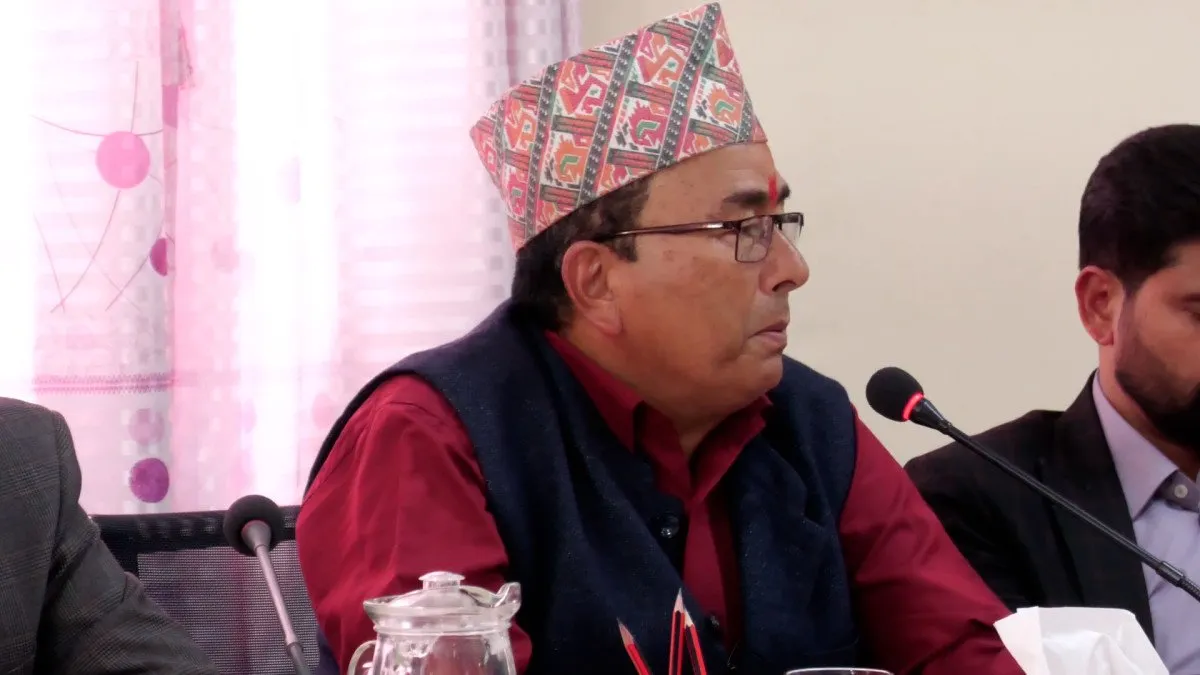
Kathmandu. Nepali Congress lawmaker Bharat Kumar Swarn has stated that even the court and the vigilance bodies are influencing the work of development construction. Speaking at a meeting of the Infrastructure Development Committee on Monday, he said that projects get stuck for months and years when their work is halted due to complaints filed with the Commission for Investigation of Abuse of Authority or the court. He mentioned that construction entrepreneurs face significant problems due to legal and institutional complexities in project construction. He stated that the price of construction materials increases when work is stopped, and this directly affects construction entrepreneurs. He accused that in some cases, even honest construction entrepreneurs are unnecessarily harassed. He also mentioned that projects are delayed due to land disputes and emphasized the need to resolve land acquisition and compensation issues in a timely manner. He also proposed that the government should make arrangements for compensation or interest for construction entrepreneurs who do not receive timely payments. Just as there is a provision for penalizing construction entrepreneurs for not completing work on time, he said there should be a system for the government to provide compensation when it does not make timely bill payments. Speaking in parliament, lawmaker Swarn said, 'Constitutional issues have also arisen for project delays. One person files a complaint with the vigilance body, the court orders to stop work, and they halt the work for years. It goes to the vigilance body, and the vigilance body does the same. The poor construction entrepreneurs are left watching.' Regarding price increases in the market and the plight of entrepreneurs, he added, 'How much do the prices of goods increase in six months or a year? There is a practice of harassing honest construction entrepreneurs here. If they pay the unnecessary commission, the work is completed quickly.' Commenting on the working style of the Auditor General's team, he said, 'Another thing is that these auditors go to the districts in Shrawan-Bhadra. After they go, they conduct audit rackets there. They have to be paid the rates in the local units. All the information they specify is needed, and they show discrepancies even in legally compliant work. When there are discrepancies, the local units create unnecessary trouble and stop grants, and money does not flow from here.' Clarifying budget assurance and payment processes, he added, 'Projects are also delayed due to land disputes. The government should have a provision to pay construction entrepreneurs on time. They call for tenders of 50 crore, but only 10 crore budget is allocated. For example, Mangalganga Hospital has now been tendered. The estimate is 45-46 crore, and 10 crore is currently allocated. Now, that contractor will have to delay for 4-5 years.' Demanding compensation for delayed payments, he said, 'Payments are not received, so one point that needs to be added is that if a construction entrepreneur submits a bill on time and does not receive payment for the bill, the Nepal government should provide compensation or interest equivalent to that amount.' He reiterated the need to proceed with projects only after ensuring adequate budget. He concluded that projects are prolonged for years due to the practice of tendering projects worth 50 crore rupees while allocating only 10 crore rupees as budget.
Read full story at source (english.ratopati.com)