
Oli and Prachanda's Surprise Political Alliance Continues
english.ratopati.com · Mon Aug 03 12:30:00 GMT 2026
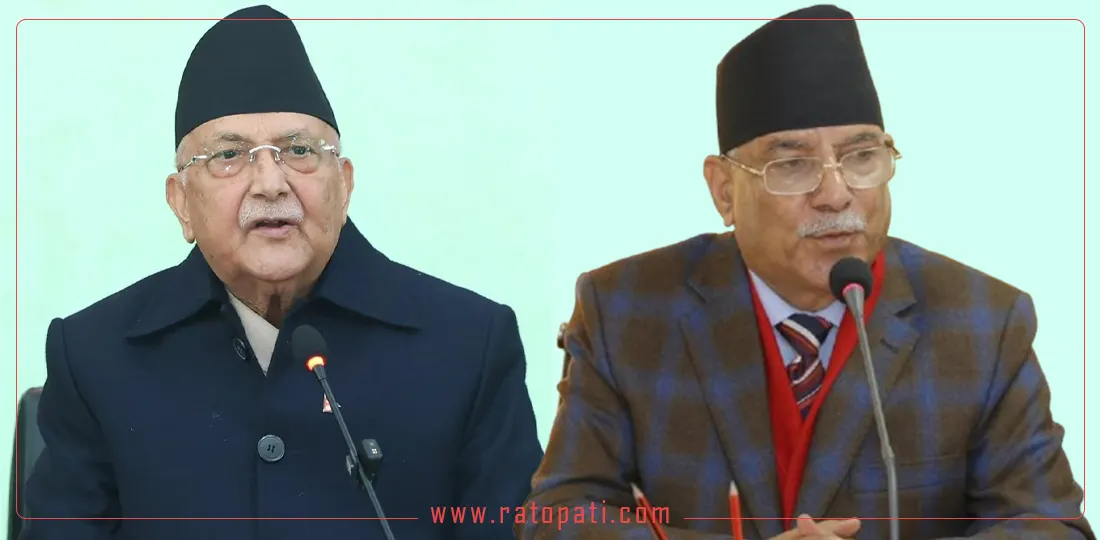
Kathmandu. The series of 'surprise' (unexpected) alliances for power between CPN-UML Chairman KP Sharma Oli and CPN (Maoist Centre) Coordinator Pushpa Kamal Dahal 'Prachanda' is ongoing. Oli-Prachanda, who stood at opposite poles ideologically and theoretically, first allied for power on October 25, 2072 BS. At that time, Prachanda himself proposed making Oli the Prime Minister. Since then, Oli and Prachanda have allied for power five times in 13 years. Oli has become the Prime Minister of the country four times. Prachanda has become Prime Minister three times. With Prachanda's proposal, Oli has succeeded in becoming Prime Minister twice. With Oli's proposal, Prachanda became Prime Minister twice (including continuity of power on February 21, 2080 BS). In the second Constituent Assembly elections held in 2070 BS, the then United Communist Party of Nepal (Maoist) suffered a humiliating defeat. At that time, the Nepali Congress became the first party and UML the second. After the elections, an agreement was reached between Congress and UML for power-sharing on a rotational basis. Maoist (now CPN) was in the main opposition bench. After the new constitution of Federal Democratic Republic was formed on October 3, 2072 BS, Oli, who had just come to leadership in UML, repeatedly pressured then Prime Minister Sushil Koirala to transfer power. However, accusing Koirala of reluctance to transfer power, Oli was tempted by Prachanda's proposal to make him Prime Minister. The surprise power alliance between Oli-Prachanda, who were bitter critics of each other, brought a new wave in the political circle at that time. However, the power alliance of Oli-Prachanda did not last long. Within 9 months of the government being formed under Oli's leadership, Prachanda himself became Prime Minister on July 20, 2073 BS with the support of the main opposition party, Congress. As the alliance with Congress was not fruitful, Prachanda again proposed cooperation and unity between communists to Oli before the 2074 House of Representatives and Provincial Assembly elections. His proposal was to form a left alliance in the elections and unite the party after the elections. Oli readily accepted his proposal. A grand left alliance was announced on October 17 at a special program organized at the Rastriya Sabhagriha. An agreement was reached between the two parties to distribute seats according to the power balance of the previous election and to create a common manifesto. The left alliance cooperated in the House of Representatives and Provincial Assembly elections. That alliance secured a near two-thirds majority in the center and an overwhelming majority in all provinces except Madhesh. In Nepal's history, the leftists received such overwhelming votes at that time. After the elections, with Prachanda's proposal, Oli became Prime Minister for the second time. According to the prior agreement, the party united on May 3, 2075 BS, forming the Communist Party of Nepal. A five-point agreement was reached between the two leaders to run the government and the party on a rotational basis. The left-wing alliance led by Oli-Prachanda, which achieved unprecedented results, had a significant opportunity to take the journey of good governance, social justice, and prosperity to new heights. However, Professor Krishna Pokharel said that the opportunity was lost due to the power interests of Oli and Prachanda. He believes that if the left alliance had been continued, the Nepali Congress would have been forced to form another alliance. In that situation, the country's politics would have gone on the right track ideologically, according to Pokharel. 'Primarily, because Oli and Prachanda were in leadership, they faltered. As a result, an unhealthy, unprincipled alliance was formed, only for immediate power,' he said. 'The party leadership faltered in delivering what was supposed to be delivered by the institutions.' At the peak of the dispute within the then CPN, Oli, who was the Prime Minister, dissolved the House of Representatives to save his government and announced elections, which led to the dissolution of the left-wing government and party itself. In the 2079 elections, the then UML and Maoist Center stood in two poles. Congress benefited from that. While Congress secured good results in elections at all three levels and became the first party, the left-wing parties, especially the Maoists, suffered a major setback. The Maoist Center led by Prachanda, which participated in the elections by forming a left-democratic alliance, could not achieve the expected results. Prachanda, who was limited to 32 seats with 1.175 million votes in the elections, pressured the then Nepali Congress President Sher Bahadur Deuba to make him Prime Minister in the first phase. Oli, who closely observed Prachanda's power-centric interests, called him to his residence in Balkot on Push 10 and proposed him as Prime Minister. With the support of UML, Maoist Center, Rastriya Swatantra Party, Rastriya Prajatantra Party, Janata Samajwadi Party Nepal, Janamat Party, etc., Prachanda succeeded in becoming Prime Minister for the third time. While reacting to the media after becoming Prime Minister, Prachanda said that he had done many favors to make Oli Prime Minister in the past and still had to repay them. However, within three months, Prachanda removed UML from power and allied with the main opposition party, Congress. That was the second betrayal Prachanda received from Oli. After cooperating with Congress for 11 months, he changed the power equation again on February 21, 2080 BS and allied with UML. Calling the 32 seats obtained by the Maoist Center a 'magic number', Prachanda started playing Congress and UML alternately. Understanding Prachanda's strategy to extend power until the 2084 elections, Oli-Deuba reached a 7-point agreement on rotational government operation on the midnight of June 17, 2081 BS. That was the second betrayal Prachanda received from Oli. Prachanda had criticized Oli's character as stabbing from behind by showing dreams of 'heaven and hell'. However, before the prior agreement was fulfilled, the Oli government fell due to the Genji movement held on September 23 and 24, 2082 BS. With the unexpected accident in the political circle, the interim government led by former Chief Justice Sushila Karki dissolved the then House of Representatives and announced elections on February 21. In that election, the new party Rastriya Swatantra Party (RSP) won nearly two-thirds of the seats with 5.185 million popular votes and formed the government, while the left-wing parties suffered the biggest setback in history. At a time when they were in a defensive position due to the Genji movement, the demand for reorganization and leadership transfer gained momentum within both parties. Facing pressure from all sides to step down, Oli-Prachanda were forced to ally for power for the fifth time. Oli-Prachanda, who are master players of power interests and betrayal politics, made a three-point agreement on July 9, sharing power in provincial governments. Although those close to Oli and Prachanda believe that this agreement will lead to party unity along with cooperation, ordinary citizens and left-wing leaders and cadres cannot trust them due to their past characters. Professor and left-wing analyst Krishna Pokharel expressed confidence that the movement could be saved if Oli and Prachanda remained in advisory roles and brought forward new leadership. He said, 'Oli and Prachanda's cooperation might save themselves for the time being, but it will not save the communist movement. Will the cadres save the leaders or the movement? If they are truly honest party cadres, they should save the movement.'
Read full story at source (english.ratopati.com)