
Industry Committee Chair Directs Nepal Oil Corporation to Map LPG Cylinders
english.ratopati.com · Tue Aug 04 09:35:30 GMT 2026
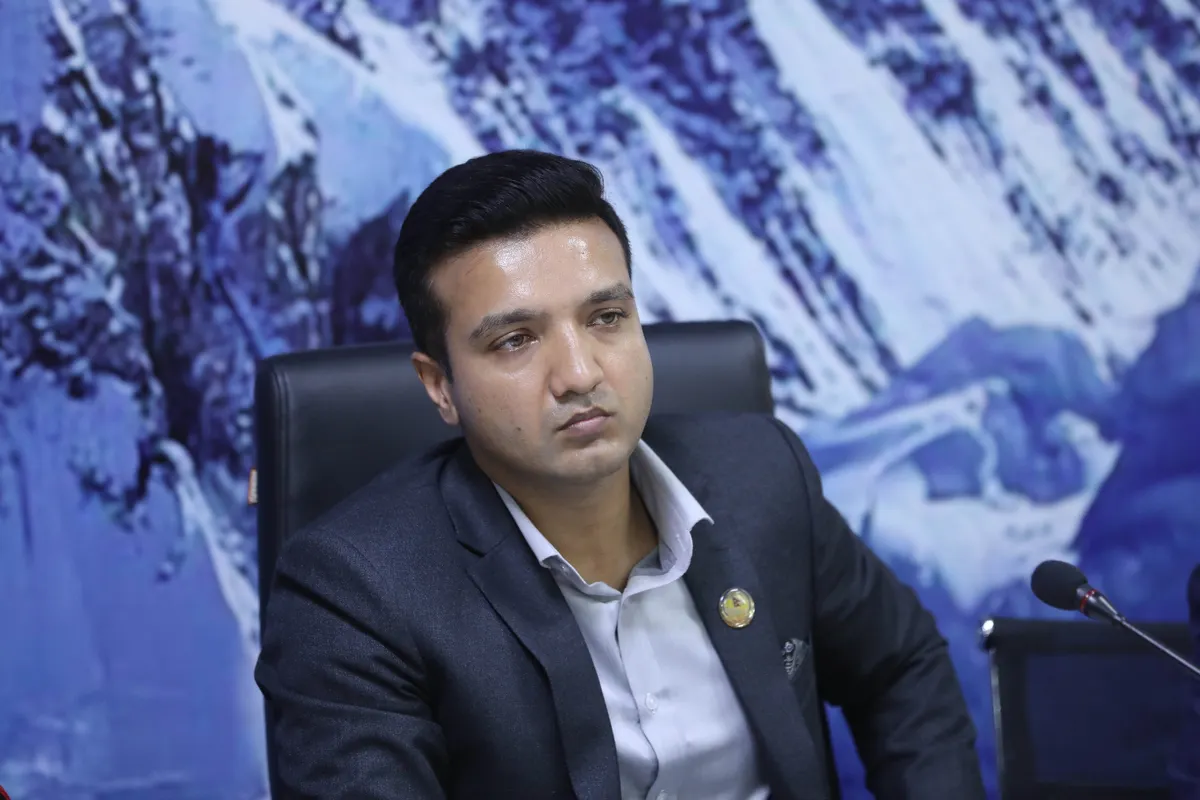
Kathmandu. Chairman of the Industry, Commerce, and Consumer Welfare Committee under the House of Representatives, Rahbar Ansari, has directed Nepal Oil Corporation to immediately map LPG cylinders. In the meeting of the committee held on Tuesday, he directed to map approximately 1 crore 75 lakh gas cylinders across the country to end the artificial shortage of LP gas. He stated that although he had directed to map the cylinders 17 days ago, it has not been implemented. He also warned the leadership of the Oil Corporation to step down if they cannot keep pace with the committee's progress. Emphasizing the widespread public pressure on them, he said that work should not be delayed. Ansari said that each gas cylinder should be tracked through a digital system by placing a barcode or QR code on it. He claimed that if arrangements are made to stop the exchange of cylinders without codes within 30 days, the cylinders hidden in the market will automatically come out. He said that the state should keep details of which cylinder is in use, by which company, and by whom, by linking the details of gas cylinders with the household details of Nepal Electricity Authority. Speaking at the meeting, he said, 'We had directed 17 days ago that this cylinder should be mapped.' He added, 'I know mapping cannot be done in 17 days, but what has Nepal Oil Corporation done in that mapping work?' Emphasizing the pressure from consumers and the public, he urged them to present a work plan. Warning to submit resignation if the government's speed cannot match the committee's speed, he said, 'Therefore, if the speed of this government cannot match the speed of this committee, then submit your resignation.' He clarified that if arrangements are made not to exchange cylinders without codes within 30 days, all gas depots will be supplied, and mapping is mandatory for that. Giving the example that gas cylinder details can be linked with electricity meters, he said, 'Put an ID on every gas cylinder.' He said that it would be easy to know which gas cylinder is in the depot, dealer, or which place. Chairman Ansari also urged the government to review the uniform pricing policy for gas. According to him, the government has to bear a huge subsidy burden because 14.2 kg domestic cylinders are currently being used by five-star hotels, large industries, and commercial establishments. He suggested introducing cylinders of 50, 100, and 450 kg capacity for commercial use and making 5 kg small cylinders available for students, renters, and low-consumption consumers. According to Ansari, the government is incurring a loss of approximately Rs 938 on each cylinder. He said that when approximately 7 lakh cylinders are used in the commercial sector monthly, about Rs 65 crore of subsidy is being spent in that sector alone. Stating that this amount reaches billions of rupees annually, he emphasized that the subsidy should be focused on actual domestic consumers. He urged the government to arrange for gas to be provided at market prices to five-star hotels and large industries and to implement a concessional policy targeting remote areas, students, and low-income consumers. Speaking in the same context, he said, 'A five-star hotel is using 300 cylinders a month, and it is using 100 kg or 450 kg cylinders instead of 14.2 kg in India and Europe.' He said that 10 cylinders would be enough if 100 or 450 kg cylinders were provided. Stating that the state is bearing a loss of Rs 938 per cylinder, he questioned, 'And should the state provide a cylinder with a loss of Rs 938 to a five-star hotel selling tea for Rs 500? And should students living in rented rooms here get cylinders for the same price?' He said that 5 kg cylinders should be provided to students and small consumers, and large capacity cylinders should be opened for large industries. He emphasized the need to end the practice of hanging businessmen's files in various rooms and urged producers to inform the committee if such files are being held up. He drew attention to the fact that the state is facing a huge financial burden due to the use in the commercial sector and urged seriousness in this matter. He also urged the Gas Producers Association to collaborate with Nepal Oil Corporation on technology-friendly and innovative solutions. He said that the problems of gas shortage, artificial hoarding, and subsidy misuse currently being faced can be solved by implementing gas cylinder mapping and a commercial cylinder system.
Read full story at source (english.ratopati.com)