
Gulam Dharma Festival Begins for Newar Buddhist Community
english.ratopati.com · Thu Aug 13 00:12:34 GMT 2026
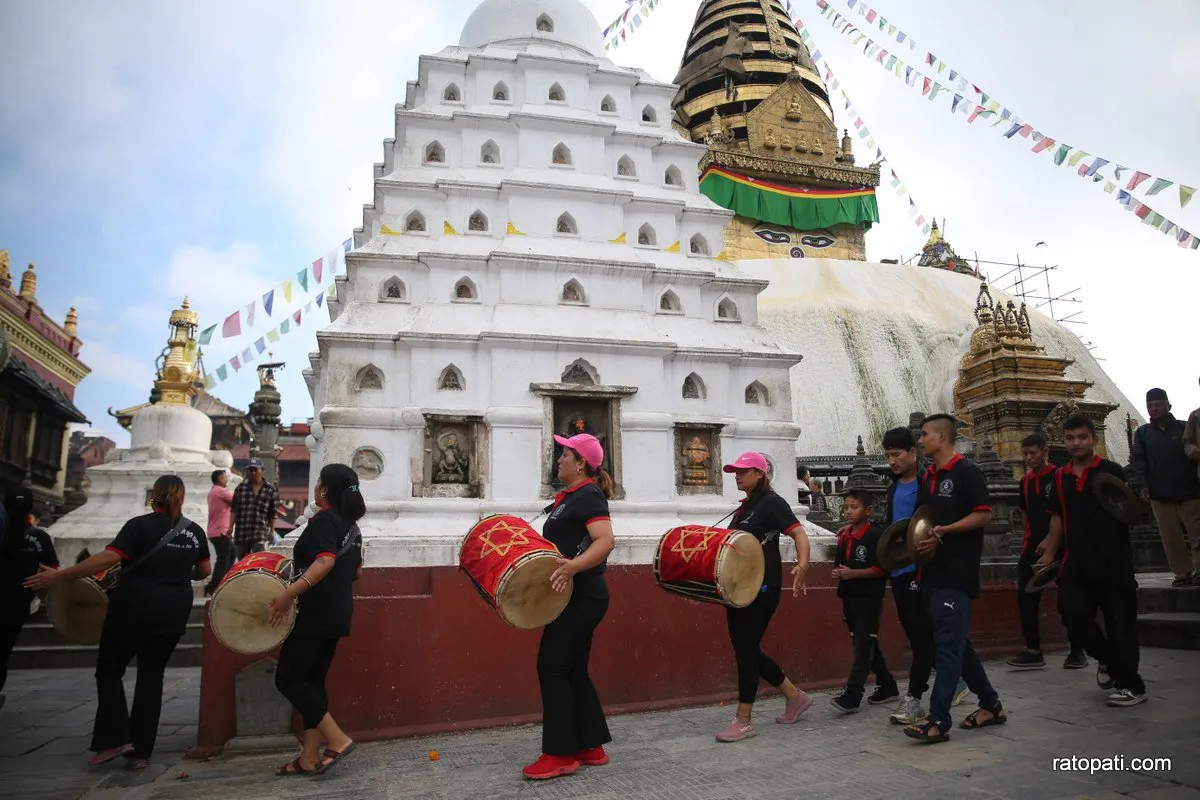
Kathmandu. The Gulam Dharma, celebrated by the Buddhist Newar community every year from the first day of the waxing moon of Shravan to the first day of the waxing moon of Bhadra according to the lunar calendar, begins today. The word 'Gulam' in the Nepali language means nine and 'La' means month. This festival, celebrated after completing nine months since the beginning of Nepal Sambat, is divided into two parts: 'Gulathwa' and 'Gulaga'. Gulam Dharma is one of the festivals celebrated with special religious devotion and cultural enthusiasm by the Newar community who have been living in the Kathmandu Valley since ancient times. Gulam Dharma is considered not only a cultural festival but also a festival of religion, practice, pilgrimage, charity-merit, and community unity. During this festival, there is a tradition of performing worship and prayers at various religious sites, visiting stupas and viharas, undertaking religious journeys with music, and participating in meritorious deeds. Although Gulam Dharma is primarily prevalent among the Newar Buddhist community in the Kathmandu Valley, its religious and cultural practices also show the influence of Hindu traditions. As a result of the coordination between Hindu and Buddhist cultures in the religious life of the valley, both religious and cultural aspects of both religions are included in it. There is a tradition of waking up early in the morning and visiting stupas, viharas, temples, and other holy places with religious music. The tradition of undertaking religious journeys playing traditional musical instruments like Dhah Bajas and Nyaku is considered a unique identity of this festival. During this period, devotees perform darshan, worship, circumambulation, and prayers at religious sites daily. Faith in religion, discipline, and self-purification are considered the main objectives of Gulam Dharma. The core spirit of Gulam is to detach oneself from worldly busyness for some time and dedicate oneself to religion, meditation, worship, and good deeds. In the Sanatana tradition, charity, chanting, penance, pilgrimage, and worship of deities are considered means of gaining merit, while in Buddhist philosophy, faith in Buddha, Dharma, and Sangha, meditation, morality, charity, and meritorious deeds are given important places. In this sense, Gulam Dharma can be understood as a unique tradition of putting religious practice and good deeds into practice.
Religious Practice Lasting One Month
Read full story at source (english.ratopati.com)