
Roshy Rural Municipality to Scientifically Manage Water Sources for Conservation
english.ratopati.com · Tue Aug 18 02:59:08 GMT 2026
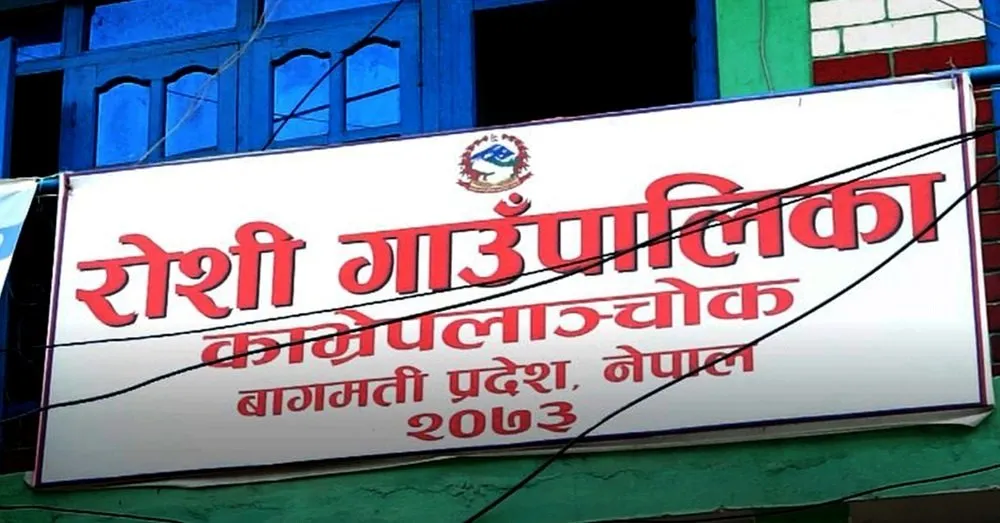
Kavrepalanchoo. In Roshy Rural Municipality, scientific management of springs and watershed areas will be done for the conservation and management of springs-watersheds in drinking water and irrigation sources. The 'Integrated Climate Adaptation Solutions for the Hindu Kush Himalayas' (Hi-CAS) project is being implemented with the objective of mitigating the impact of drying water sources due to climate change on human life and enhancing the resilience of local communities in the Hindu Kush Himalayan region. According to the Mayor of Roshy Rural Municipality, Dinesh Lama, a letter of intent has already been signed between Roshy Rural Municipality, the International Centre for Integrated Mountain Development (ICIMOD), and the Centre for Environmental and Agricultural Policy Research, Extension, and Development (SIAPRED) for the operation of the program. According to him, in addition to the scientific management of springs and watershed areas for the conservation and management of springs-watersheds in drinking water and irrigation sources, the project will also work to uplift vulnerable communities and women through gender-responsive, inclusive, and nature-friendly adaptation measures to promote gender equality and social inclusion. Similarly, it will promote the use of clean and renewable energy technologies and conserve and promote indigenous crops and agricultural biodiversity. The project plans to involve indigenous and local communities, enhance local capacity, and ensure sustainable livelihoods. A survey report indicates that 22 percent of the water springs and watershed areas in Roshy are found to be dry. This multinational project, supported by Global Affairs Canada, has been initiated in Nepal from March 2026. In Nepal, this project has been launched through SIAPRED in Roshy Rural Municipality of Kavrepalanchok and Dhankuta Municipality of Dhankuta. According to ICIMOD Director General Pema Gyalcho, the tripartite understanding will institutionalize and formalize cooperation and coordination among the implementing agencies. He said, 'Collaboration with local governments is also essential to make communities in the climate-vulnerable Himalayan and hilly regions of Nepal resilient.' A survey conducted in seven local levels of the district has shown that water sources and springs are drying up. Stakeholders have stated that water sources are drying up due to reasons such as floods, landslides, deforestation, haphazard infrastructure development, earthquakes, and climate change. Previously, ICIMOD had conducted a survey in the water sources and watershed areas of seven local levels in the district in collaboration and coordination with those local levels. In the survey conducted from November 2023 to June 2024, a total of 5,689 sources were measured in seven local levels of Kavre. In the survey, 5,168 springs and sources and 521 ponds were identified. According to the survey conducted in those levels, 27 percent, i.e., 1,521 sources, were found to be dry.
Read full story at source (english.ratopati.com)