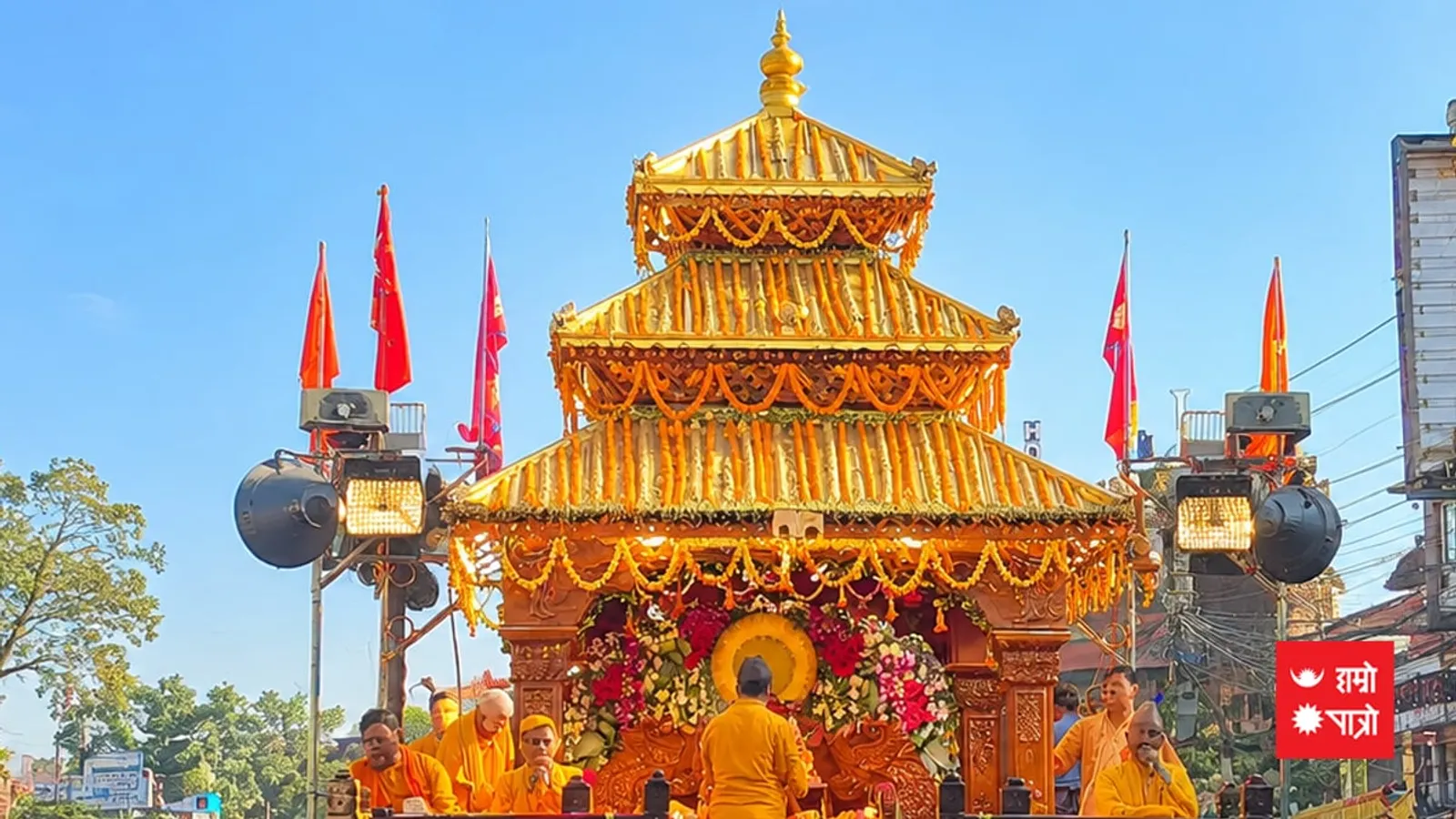
The love of Radha and Krishna is not merely the story of two divine figures; it is also a symbol of devotion, surrender, and faith. Remembering this devotion, dedication, and divine love, the Radha-Krishna Rath Yatra is held on the day after Krishna Janmashtami. The Radha-Krishna Rath Yatra held in Biratnagar is regarded as the second-largest chariot festival in Asia.
A day before the Rath Yatra, on the eve of Krishna Janmashtami, the Radha-Krishna Temple in Panitanki, Biratnagar-1, comes alive with devotional songs, bhajans, religious tableaux, dancing, and cultural performances. At exactly midnight, when the Ashtami tithi begins and Lord Krishna’s birth is celebrated, devotees gathered at the temple are traditionally offered chocolates, sweets, and various fruits as prasad.
The Radha-Krishna Rath Yatra in Biratnagar is a beautiful blend of religious faith, culture, and social harmony. Every year, on the day after Krishna Janmashtami, the idols of Radha and Krishna are placed on a magnificent chariot and taken around the city. Devotees pull the chariot while chanting, “Gopal Krishna, Radhe Krishna.” There is also a long-standing belief that even touching the rope of the chariot brings spiritual merit.
The tradition is believed to have begun in 1988 B.S. In its early years, the divine idols were carried around the city on a traditional wooden structure known as a ‘khat.’ Over time, the procession evolved into the grand Rath Yatra it is today, beginning in its present chariot form in 2025 B.S. Standing on the historic foundation laid in 1988 B.S., this year’s procession marks its sacred 95th edition.
During the Rath Yatra, thousands of devotees gather along the streets to witness the chariot and participate in the procession amid devotional singing, religious tableaux, dancing, and chants of praise. The chariot travels approximately 9 kilometers through the major market areas of Biratnagar before returning to the Radha-Krishna Temple, where the procession concludes. Devotees from different parts of Nepal, as well as from India, also visit Biratnagar to witness the Rath Yatra. The festival has become an important symbol of Biratnagar’s religious and cultural identity. Carrying a message of faith, tradition, and unity among different communities, the procession transforms Biratnagar into a city filled with devotion and celebration every year.
On the day of the Rath Yatra, it is not just a chariot that moves through the streets of Biratnagar; thousands of people’s faith, enthusiasm, and centuries-old traditions move forward alongside it. The Radha-Krishna Rath Yatra has firmly established itself as one of Biratnagar’s most significant cultural and religious celebrations. Closely associated with the worship of Lord Krishna and Radha, the procession attracts large numbers of devotees and visitors not only from Biratnagar but also from surrounding areas.
The festive atmosphere begins early in the morning. Temples and religious sites become increasingly crowded with devotees, while the streets are beautifully decorated. Various places host worship ceremonies, bhajans, and other religious activities. When the Rath Yatra begins around one or two in the afternoon, the crowd gathers along the streets to witness the grand procession.
As the chariot moves forward, devotees chant “Gopal Krishna, Radhe Krishna,” sing devotional songs, and celebrate the glory of Lord Krishna. Some offer flowers and sacred rice grains, while others simply fold their hands, seek the blessings of the divine, and watch the chariot with devotion. From children to the elderly, people participate enthusiastically, adding even more joy and vibrancy to the celebration.
The Rath Yatra is not limited to a religious ritual. Since people from different communities, age groups, and backgrounds come together for the same celebration, it also carries a powerful message of social unity and harmony. The sight of people from diverse communities standing together with the same sense of devotion reflects Biratnagar’s social diversity, mutual brotherhood, and spirit of coexistence.
The Radha-Krishna Rath Yatra also provides an opportunity to pass cultural traditions and heritage on to younger generations. Children who come to watch the procession with their parents are not merely witnessing a religious festival; they are also learning about the history, culture, and traditions of their city.
Although the form and management of the Rath Yatra have changed over time, its core spirit remains the same—faith, tradition, harmony, and collective joy. Therefore, Biratnagar’s Radha-Krishna Rath Yatra is not merely a religious festival; it is a living tradition deeply connected to the city’s cultural identity and everyday life. Every year, the thousands of devotees moving alongside the chariot remind us that traditions may evolve as generations change, but the journey of faith and emotion connected to them continues forever.
Heartfelt wishes to everyone on the occasion of the Radha-Krishna Rath Yatra!
Jai Radheshyam!
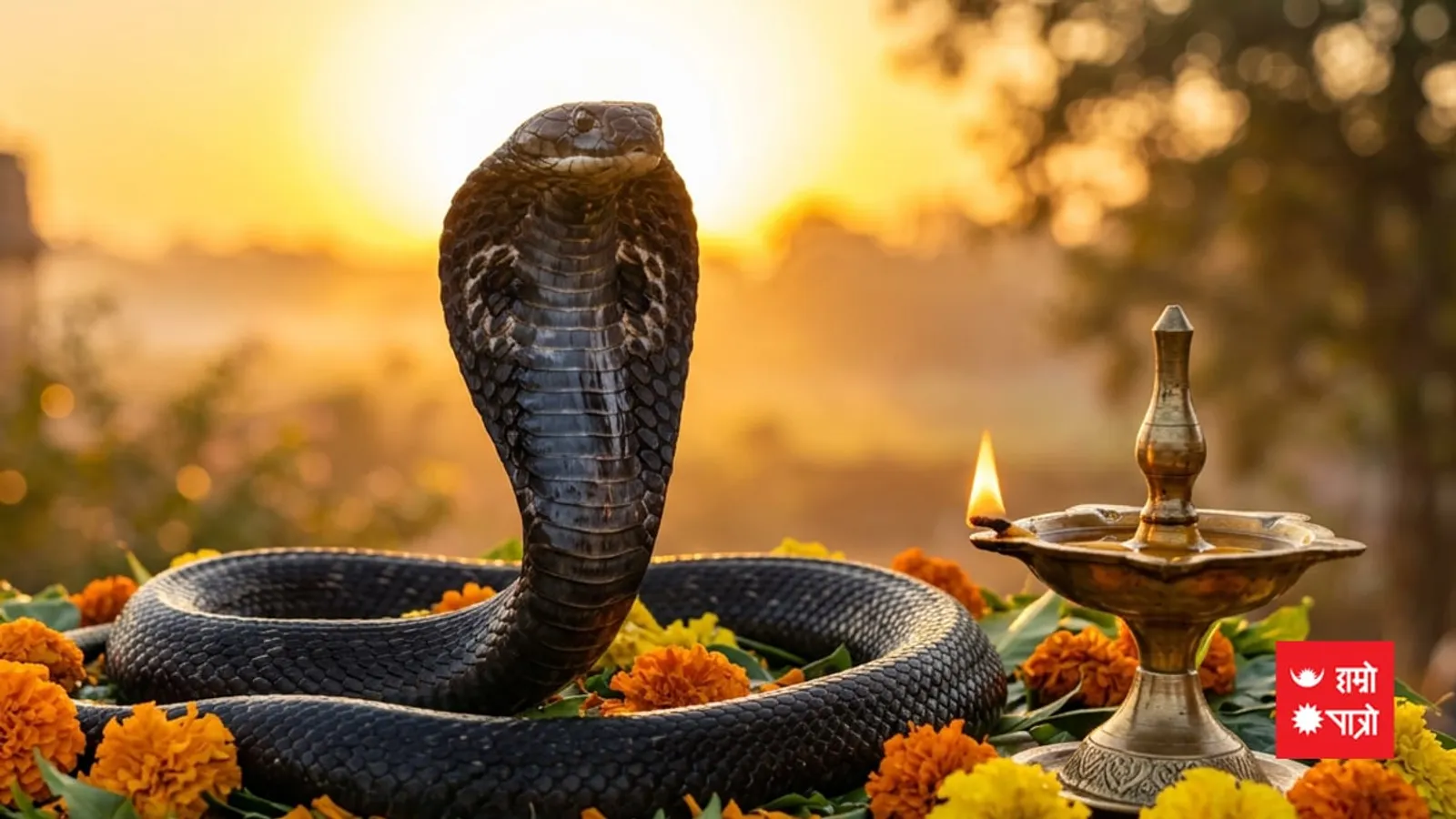
Gunga Navami, also known as Goga Navami, is a religious and cultural festival observed on the ninth day (Navami) of the waning phase of the moon in the month of Bhadrapada. On this day, Goga Ji, also known as Jahar Veer Goga, is worshipped with deep reverence as a serpent deity. Celebrated for generations, the festival reflects not only religious faith but also a deep connection with nature, folk culture, and community spirit.
The tradition of worshipping Goga Ji as a heroic figure and serpent deity is prevalent in various parts of India, particularly in Rajasthan, Haryana, and Punjab. Some communities in Nepal also observe Gunga Navami with devotion and faith. On this occasion, devotees worship Goga Ji at home or at designated places of worship, light incense and lamps, and pray for the happiness, peace, and prosperity of their families.
Beyond its religious significance, Gunga Navami also carries an important human and cultural meaning. Festivals are not merely days of rituals and worship; they are also opportunities to pass down the customs and traditions inherited from our ancestors to the younger generation. The day brings family members together, encourages them to remember their traditions, and creates an atmosphere of warmth and connection within the community.
According to popular belief, Goga Ji is also revered as a protector against snakebites. This belief has made devotion to Gunga Navami particularly strong among rural and traditional communities. Even amid modern lifestyles and changing social environments, festivals like Gunga Navami continue to remind people of their roots and help preserve their cultural identity.
The year 2083 B.S is the 19th edition of this day.
The government is conducting various awareness programs to reduce all kinds of human trafficking, especially the increasing trafficking of children and adolescents. Today, through various programs, rallies and meetings, we advocate for a Nepal free of human discrimination. Human Trafficking and Trafficking Act 2064 and Regulations 2064 have been enacted. However, due to the proper implementation of the Act and Regulations, the work against trafficking in women has not been fully successful. Meaningful wishes for today's day.




आज कामको गति आफ्नै हातमा रहनेछ। आम्दानीसँग जोडिएको एउटा राम्रो सम्भावना देखिन्छ। नयाँ जिम्मेवारी आए पनि सम्हाल्न सकिनेछ। मनलाई अनावश्यक दबाब नदिनुहोस्। आजको शुभ रंग सिन्दुरी हो भने शुभ अंक ७ रहेको छ।
