
One Year After Genji Movement, Youth Reflect on Progress and Future Agendas
english.ratopati.com · Tue Sep 08 13:21:47 GMT 2026
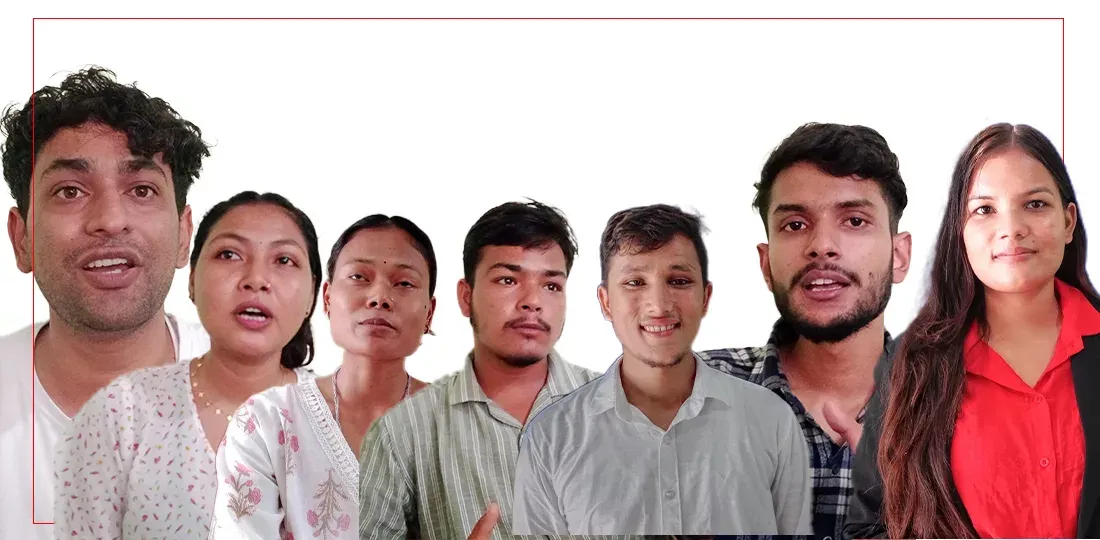
Dhangadhi. ‘If youth unite, they have the courage to change the government in two days, now the responsibility to change the country also lies with the youth,’ this statement by Ranjana Chaudhary of Kailali clearly reflects the mood of the youth of Sudurpashchim a year after the Genji movement. Their conclusion is that the movement has increased political awareness among the youth and their courage to question the state. For them, the objective of the movement is not limited to changing the government; good governance, accountability, employment, justice, and meaningful youth participation at every level of the state are still unfinished agendas. On Tuesday, on the occasion of the completion of one year since the start of the Genji movement, youth participating in a review and dialogue program organized in Dhangadhi, the capital of Sudurpashchim Province, expressed their views on the way forward after evaluating the post-movement situation. At the ‘Inclusive Citizen-Youth Dialogue and Workshop on Justice, Accountability, State Reform, and Youth Participation’ organized at the Faya Nepal hall, youth participants from various districts, while taking the political awakening created by the movement as an achievement, stated that the process of state reform is still incomplete. According to Ranjana Chaudhary, the movement has made the youth aware of their political power and role. She believes that change is possible if the youth stand together. She said that the country desired by the youth should be one with good governance, free from corruption, and accountable. Although political instability is decreasing, she said that the state must address the expectations of the youth to turn it into a lasting achievement. Similarly, youth Hemraj Joshi said that political awareness and consciousness have increased among the youth after the Genji movement. According to him, political parties should now see youth not just as electoral voters but as partners in policy-making. Joshi, who is also an agricultural expert, said that to utilize the economic potential of Sudurpashchim, it is necessary to move towards the concept of ‘rural industrialization’ and ‘circular economy’. He suggested connecting local resources, production, and employment to increase Sudurpashchim’s contribution of about 7 percent to the national GDP. Youth have stated that although some positive changes are visible in some sectors of the state after the movement, they cannot be considered sufficient. Youth Vivek Paneru considered the opening of some corruption files and the increase in digitalization in government work as achievements of the movement. However, he complained that the families affected during the movement have not yet felt full justice. According to him, the state should also prioritize the natural and tourist potential of Sudurpashchim for its development. He believes that developing tourist areas like mines in Achham and Bajhang and places like Badi Malika can strengthen local production, employment, and the economy. Similarly, youth Tek Saud emphasizes youth political and policy participation. He says that the power of the youth seen on the streets during the movement should now reach the policy-making level. He demanded that the government should arrange ‘paid internships’ for studious youth. He argues that the issues raised by the movement will turn into lasting achievements only if the capabilities, studies, and skills of the youth are linked to nation-building. Participant Rabita Mahato said that learning from the damage caused during the movement, the focus should now be on nation-building. According to her, although movements are necessary for change, the phase after that is even more important – in that phase, both the state and citizens must act responsibly. Participant Pooja Shah said that real change is not possible until there is meaningful participation of youth in every mechanism of the state. She emphasized that youth should not be understood as just one group, and the voices of women and marginalized youth should also be included in the state’s policies and decision-making processes. She said that youth representation should be seen not only in numbers but also in decision-making authority and responsibility. Another concern of the youth of Sudurpashchim is employment and increasing foreign migration. On behalf of the program organizers, participant Padam Saud said that Sudurpashchim is rich in natural resources including hydropower and medicinal herbs, but they are not being utilized sufficiently. He believes that if local resources are utilized properly to create employment, the situation where youth are forced to go abroad can be reduced. According to him, the movement has taught youth to speak about their rights. Now, there is a need to connect that consciousness with local production, employment, and economic self-reliance. The youth participants, who attended the workshop that lasted from 11 am to 1 pm, concluded that instead of remembering the issues raised by the movement, the consciousness gained from it should be put into practice. Their common view was that local, provincial, and federal governments at all three levels should prioritize the demands of the youth. They have now put forward good governance, corruption control, justice, employment, digital services, production increase, and youth participation in policy-making as their primary agendas.
स्रोतमा पूरा पढ्नुहोस् (english.ratopati.com)