
Prime Minister Balen Shah Holds Discussions with Top Business Leaders on Economic Challenges and Investment
english.ratopati.com · Fri Sep 11 09:02:24 GMT 2026
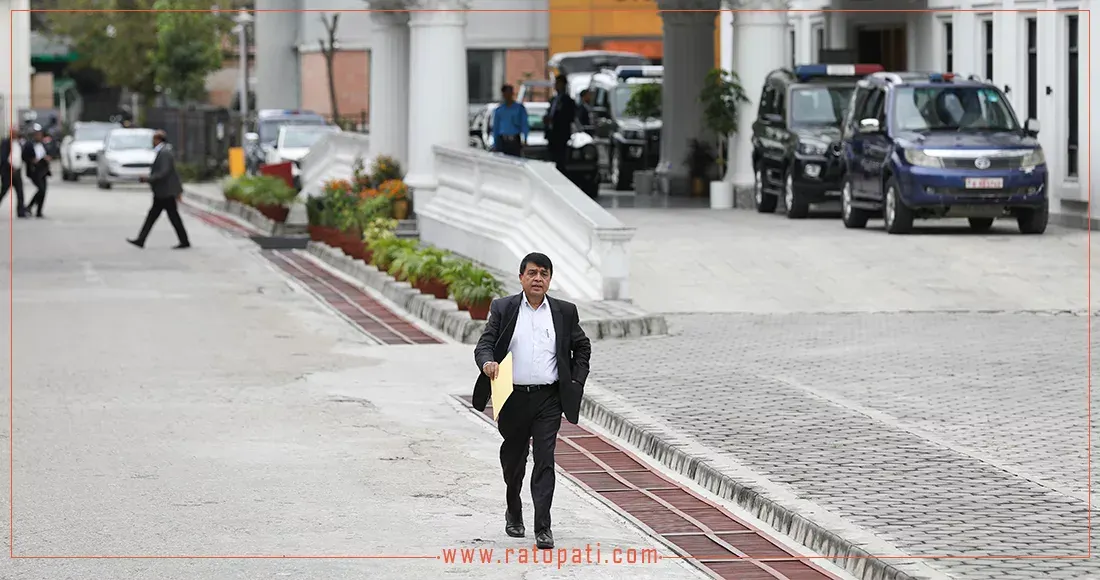
Kathmandu. Prime Minister Balen Shah and the country's top industrialists-businessmen held detailed discussions on the existing economic challenges, investment expansion, and policy reforms at the Office of the Prime Minister and Council of Ministers. The meeting, which was scheduled for half an hour, lasted for almost two hours. Businessmen Vinod Chaudhary, former President of the Federation of Nepalese Chambers of Commerce and Industry Chandra Prasad Dhakal, former State Minister Umesh Shrestha, and senior industrialist Pawan Golyan participated in the discussion, which was held at the personal invitation of the Prime Minister. MP and businesswoman Bidushi Rana facilitated the meeting. Businessman Min Bahadur Gurung was also invited to the discussion, but he could not attend due to health reasons. After the discussion, former President of the Federation of Nepalese Chambers of Commerce and Industry Chandra Prasad Dhakal said that the dialogue with the Prime Minister was very positive, encouraging, and result-oriented. Dhakal informed that the problems in the industry, trade, tourism, and infrastructure sectors were openly discussed from the private sector's side, and the Prime Minister assured full guardianship from the state to promote investment. 'The Prime Minister listened to our concerns very well,' said Dhakal. The businessmen who went for half an hour stayed for two hours. Dhakal stated that this meeting was not just a formal platform for listening to grievances. 'The conversation was in a two-way interactive style,' he added, 'the Prime Minister showed keen interest in reaching the depth of the subject, asking questions himself, and finding concrete solutions.' According to Dhakal, Prime Minister Shah presented the idea of advancing domestic capital mobilization and foreign direct investment simultaneously. The Prime Minister was particularly interested in attracting private sector investment in infrastructure, creating domestic employment opportunities, and broadening the state's revenue base. 'We need to create enough opportunities and employment here to stop the thousands of youths who are forced to go abroad daily,' Dhakal quoted the Prime Minister as saying. He said that the Prime Minister appeared very determined in this regard. The Prime Minister conveyed the message that the government is ready to bring in new laws if the existing acts, laws, or policies hinder investment, thereby creating an investment-friendly environment. The businessmen primarily demanded that the morale and confidence of investors should be boosted. They emphasized the need to remove procedural hassles in government agencies and end the situation of waiting for years for project approval, ensuring timely decisions. The Prime Minister stated that the government would facilitate all necessary processes for investment. He urged the private sector to invest more, open new industries, and also bring foreign investors into Nepal. Speaking to journalists after the discussion, MP and businesswoman Bidushi Rana, who facilitated the meeting, said that the discussion with the Prime Minister was very detailed and solution-oriented. She informed that everyone was aware of the problems, but the main focus was on finding solutions. 'First, Nepalis themselves should invest in Nepal,' Rana quoted the Prime Minister as saying. She added that bringing in foreign investment is a matter that comes after that. The Prime Minister emphasized prioritizing domestic entrepreneurs, followed by non-resident Nepalis, and then bringing in foreign investment. During the discussion, businessmen complained that unnecessary harassment and legal intimidation by state investigative bodies had lowered the morale of the entire private sector. MP Rana informed that the Prime Minister assured full security for businesses in this regard. It was concluded in the discussion that arresting and detaining businessmen abruptly sends a negative message to the market. 'Except in cases of treason or major misconduct, if problems arise due to policy or systemic weaknesses, businessmen should not be imprisoned,' Rana said, 'rather, they should be allowed to work by imposing financial penalties, the Prime Minister was clear about this.' MP Rana stated that the Prime Minister put forward attractive proposals to attract the private sector in infrastructure development. The Prime Minister proposed that if anyone dares to invest up to one billion rupees in remote areas like Dolpa, Mugu, or Rara and opens a factory or hotel, the government will take full responsibility for providing roads, bridges, and electricity to those areas. Following this proposal, the businessmen said that if the state guarantees basic infrastructure, the private sector is ready to pour investment into even the most remote areas. Furthermore, during the discussion, the issue of increasing the number of seats in quality medical and nursing colleges in Nepal was raised to prevent the emigration of Nepali students and capital abroad. Discussions were also held on facilitating the establishment of world-class universities and hospitals in Nepal and industrializing agriculture. The Prime Minister clarified to the businessmen that the government is committed to achieving the goal of 7% economic growth by taking the private sector, which accounts for 80% of the country's economy, into full confidence.
स्रोतमा पूरा पढ्नुहोस् (english.ratopati.com)