
Opposition Parties Raise Concern Over Government's Monsoon Disaster Preparedness in National Assembly
english.ratopati.com · Wed Jul 22 06:00:53 GMT 2026
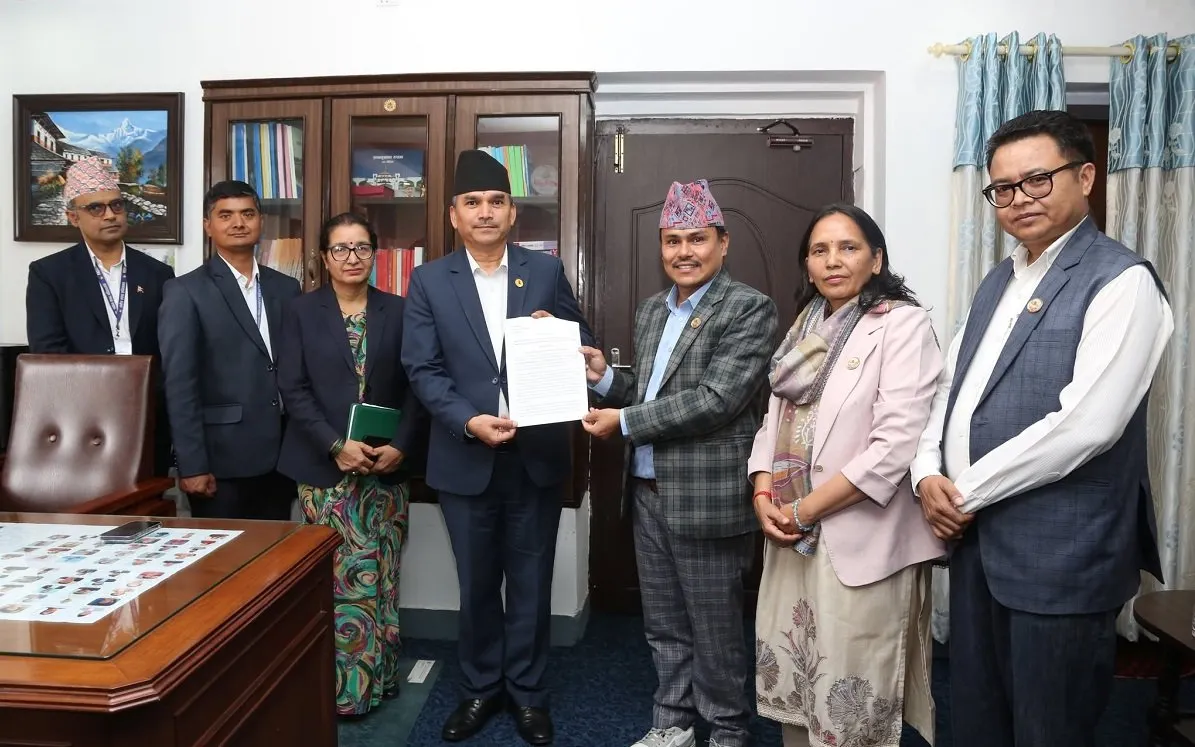
Kathmandu. Opposition parties have registered a motion of urgent public importance in the National Assembly drawing the attention of the Home Minister to the government's preparedness for monsoon-induced disasters. The motion was proposed by Kamala Panta, leader of the Nepali Congress's National Assembly parliamentary party, and supported by Chief Whip Padam Bahadur Pariyar of the Congress, MP Somnath Poudel of CPN-UML, Chief Whip Madankumari Shah of the Communist Party of Nepal, and MP Pooja Chaudhary of the Janata Samajwadi Party (JSP) Nepal. The motion highlights the increasing risk of floods, landslides, inundation, lightning, and glacial lake outburst floods across the country with the onset of the monsoon, stating that the government's preparedness is insufficient and demanding a clear response from the Home Minister. The proposal mentions that the National Disaster Risk Reduction and Management Authority's 'National Monsoon Preparedness and Response Action Plan-2083' estimates that 51,868 households, comprising 226,661 citizens, could be affected by monsoon-induced disasters this year. It emphasizes the need for timely and effective preparation due to the rising risks of temperature increase, flash floods, landslides, and glacial lake outbursts. The proposal notes that in the past decade, 3,074 people have lost their lives and 502 have gone missing due to floods, landslides, heavy rainfall, and lightning. It also presents data showing 4,769 injuries and 33,198 families affected. Between Shrawan 2082 and Ashar 2083, approximately 7,500 disaster incidents occurred, resulting in 140 deaths, around 1,900 injuries, 36 still missing, and 14,000 families affected. The proposal expresses concern that the government only focuses on rescue, relief, and rehabilitation after disasters strike each year. It states, 'Despite experiencing such significant human and physical losses, the recurring pattern of focusing on rescue, relief, and rehabilitation only after disasters occur is a matter of serious concern.' It further adds, 'Transforming available forecasts into timely actionable decisions, relocating citizens from high-risk settlements to safe areas, and proactively managing necessary manpower, equipment, food, and temporary shelters have not yet been effectively implemented.' The proposal also cites the example of the floods and landslides in Ashwin 2081, where the Department of Hydrology and Meteorology issued advance warnings for 56 districts, but preparedness was inadequate, citizens were not evacuated from high-risk areas in a timely manner, leading to significant losses. The proposal states, 'This incident shows that having forecasts is not enough; a clear operating procedure is necessary, outlining which agency will take what action and within what timeframe after receiving the information.' Questions have also been raised about the safety of persons with disabilities, children, the elderly, pregnant women, indigenous communities, and citizens living in high-risk areas. The proposal notes that the government lacks a clear plan for their rescue, rehabilitation, and accessible early warning systems. It is also claimed that effective coordination between the federal, provincial, and local levels is lacking. An integrated command system among district administration, security agencies, the Department of Hydrology and Meteorology, the Department of Roads, health institutions, and local disaster management committees has not been effectively operationalized. The proposal also identifies high-risk roads and areas. Questions have been raised about the government's preparedness for the Kavre-Sindhuli section of the BP Highway, the Narayangadh-Muglin section of the Prithvi Highway, the Karnali Highway, the Siddhababa section of the Siddhartha Highway, the Daunne section of the East-West Highway, the Naubise-Kathmandu section of the Tribhuvan Highway, flood-affected areas in the Terai-Madhes, and remote hilly roads in Karnali and Sudurpaschim. The motion of attention also raises the issue of the leadership vacancy at the National Disaster Risk Reduction and Management Authority. The proposal states, 'At a time when the country is at high risk of monsoon-induced disasters, leaving the central body for disaster management without clear and full-time leadership not only raises serious questions about policy formulation, inter-agency coordination, information flow, and response capacity but also indicates that the government is not sensitive or prepared to reduce the loss of life and property caused by disasters.' The proposal demands that the government inform the parliament about its preparations for monsoon-induced disaster management. Through the motion of attention, it is demanded that the implementation status of the National Monsoon Preparedness and Response Action Plan-2083 be made public. Information about the preparedness of high-risk districts and settlements is to be provided. Clarity is sought on the availability of rescue personnel, equipment, relief supplies, and the relief fund. Furthermore, the government is also required to provide information on coordination between federal, provincial, and local levels, the resolution of the leadership vacancy at the authority, the effectiveness of the disaster early warning system, and alternative mechanisms for disseminating information to citizens in remote areas. Additionally, the proposal demands that the National Assembly be provided with detailed information about the government's preparations for post-disaster rescue, relief, and rehabilitation, as well as the immediate safety of high-risk and vulnerable areas and communities. Six Points of Attention: 1. What is the current implementation status of the National Monsoon Preparedness and Response Action Plan-2083, the prioritization and details of high-risk districts and settlements, and the availability and preparedness of rescue personnel and equipment? 2. What measures has the government adopted regarding coordination and command structures among local, provincial, and federal levels, the resolution of the leadership vacancy at the National Disaster Risk Reduction and Management Authority, and its effective management? 3. Although a system has been established to send free SMS alerts via shortcode 1155 to service recipients in high-risk areas for disasters such as floods, landslides, lightning, and storms, in coordination between the Department of Hydrology and Meteorology and Nepal Telecom, what is the implementation status, accessibility, geographical availability, timeliness, and effectiveness of this system, and what steps has the government taken so far to address it? 4. Are the essential rescue materials ready for various mechanisms, rescue teams, security agencies, and community-level rescuers who need to be on standby to assist in rescue operations during disasters? What is the status of the immediate budget required for rescue and the relief fund? 5. What alternative arrangements and mechanisms has the government put in place to ensure timely and accessible information reaches remote areas with weak mobile networks, citizens without phones, communities using only maternal and local languages, the elderly, and persons with disabilities? 6. Preparedness and coordination for post-disaster rescue, relief, and rehabilitation, and the immediate safety of high-risk and vulnerable areas and communities.
स्रोतमा पूरा पढ्नुहोस् (english.ratopati.com)