
Government Imposes 5% VAT on Electricity Consumption Above 50 Units, Faces Criticism
english.ratopati.com · Thu Jul 30 14:05:04 GMT 2026
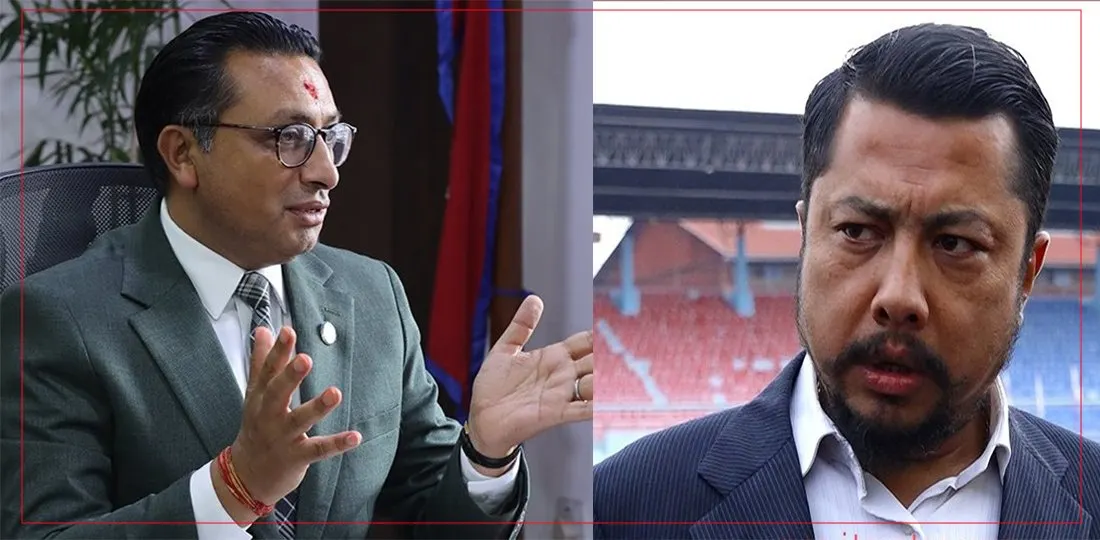
Kathmandu. The government announced in the budget for the upcoming fiscal year 2083/84 that a 5% value-added tax (VAT) will be imposed on electricity. Finance Minister Dr. Swarnim Wagle has introduced a provision in the budget to impose a 5% VAT on consumers who consume more than 50 units of electricity. The provision announced by the Finance Minister in the budget has come into effect from Shrawan 1. Consumers using more than 50 units of electricity have started being charged a 5% VAT. The government is facing criticism for imposing VAT on electricity consumption. The government decided to withdraw the 3% equality tax imposed in the budget on education and health. However, the 5% VAT on electricity has been retained. There are demands for the VAT on electricity to be withdrawn, but the government does not appear to be preparing to remove the VAT. The imposition of a 5% VAT on consumers using more than 50 units of electricity has led to criticism not only of the government and the Finance Minister but also of the Energy Minister Biraj Bhakta. Amidst widespread criticism, Energy Minister Shrestha is preparing to review the electricity tariff itself to facilitate the 5% VAT. Energy Minister Shrestha decided to review the tariff through a meeting of the Nepal Electricity Authority's board of directors on Wednesday. A committee has been formed under the convenorship of board member Anshukiran Shahi for the tariff review. The committee includes representatives from the Ministry of Energy, the Federation of Nepalese Chambers of Commerce and Industry, energy and finance sector experts, consumer representatives, and the Deputy Executive Director of the Nepal Electricity Authority's Distribution and Customer Service Directorate as member-secretary. The Authority stated that the committee was formed with the objective of maximizing electricity utilization, expanding domestic consumption, and developing a consumer-friendly tariff system. The committee is required to submit its report within 15 days. Based on the committee's report, the Authority plans to submit a proposal to the Electricity Regulatory Commission for determining the new tariff rates. According to committee convenor Shahi, different tariff rates will be set for summer and winter. The government has seen the 5% VAT imposed on electricity from the upcoming fiscal year as a way to quell public anger and as a counter to Energy Minister Wagle's move. During the budget preparation, Finance Minister Dr. Wagle decided to impose a 5% VAT on consumers consuming more than 50 units of electricity without sufficient discussion with Energy Minister Shrestha. This provision, which came into effect from Shrawan 1, is facing strong criticism from the government, with allegations that it has increased the financial burden on low-income and middle-class consumers. After the opposition to electricity VAT in parliament and on the streets following the budget, Finance Minister Wagle stated in parliament that preparations were underway for price adjustments. However, even at the beginning of the fiscal year, there was no discussion on adjusting electricity tariffs. Last Tuesday, Finance Minister Wagle made a sarcastic remark targeting the Prime Minister and the Energy Minister regarding the advisors and personal staff they had appointed. This appears to have angered Energy Minister Shrestha. Shrestha immediately countered by stating that he had appointed only one unpaid advisor, not twenty. This also indicates internal conflict. According to sources, Finance Minister Wagle brought the issue of imposing a 5% VAT on electricity in the budget without discussion, and the Energy Minister had been advocating for it under the Finance Minister's protection. Energy Minister Shrestha repeatedly urged the Finance Minister to either completely remove the VAT or provide exemptions to consumers using up to 150 units. However, the Finance Minister flatly refused to remove the VAT on electricity, even though he withdrew the 3% equality tax imposed on education and health under pressure from the Prime Minister. Furthermore, after the Finance Minister's sarcastic remarks towards the Energy Minister, sources claim that the Energy Minister has moved forward with directly reducing the electricity tariff to match the 5% VAT to provide relief to consumers. Ultimatum to Reduce Tariff On Wednesday, Minister Shrestha clearly proposed reducing the tariff and increasing consumption at a time when produced electricity is being wasted, during the Authority's board meeting. The committee formed under the convenorship of Authority board member Anshukiran Shahi will prepare a draft of the new tariff within the next 15 days. After the board of the Authority approves the proposal prepared by the committee, it will be sent to the Electricity Regulatory Commission for final approval. According to convenor Shahi, hydropower production has increased significantly in recent years. He stated that a policy to increase domestic consumption is necessary as the electricity produced, especially during the monsoon, cannot be fully consumed. Convenor Shahi said that preparations are being made to improve the tariff structure targeting domestic and industrial sectors due to the increase in electricity production. He said, 'We will submit a report to the Electricity Regulatory Commission within 15 days to set prices according to the season. The committee will work to reduce electricity tariffs.' According to him, the Authority aims to provide further concessions to domestic consumers and supply electricity at appropriate rates to industries with high electricity consumption. The Authority expects that this will reduce the monthly electricity expenses of consumers and decrease the production costs of industries. Convenor Shahi stated that Energy Minister Shrestha's main focus is on implementing different tariffs for the monsoon and winter. Currently, Nepal's installed electricity capacity has reached 4,300 megawatts, while the peak demand is only 2,200 megawatts. Due to technical obstacles in exporting to India and Bangladesh, about 1,000 megawatts of electricity is at risk of being wasted. 'Currently, produced electricity is being wasted due to lack of consumption. In such a situation, it is necessary to encourage customers to increase consumption by reducing the tariff rate,' said convenor Shahi, quoting Minister Shrestha. The Energy Minister has prepared to set lower tariffs during the monsoon when electricity production is higher due to increased water flow in rivers. Similarly, the government's strategy is to reduce the production costs of industries by providing them with cheaper electricity and increase consumption. The Ministry of Energy is preparing to adjust electricity tariffs by offering significant concessions on demand and energy charges during nighttime hours when electricity is wasted. Meanwhile, Finance Minister Dr. Swarnim Wagle is defending the VAT. He has claimed in public forums that technical work is underway to ensure that VAT is not levied on consumption up to 150 units instead of 50 units. 'Whether it is through price adjustment or by ensuring that tax is only applied above 100-150 units, we will address it,' said Wagle. The Authority last increased tariffs by about 19% in Shrawan 2078. Since then, although production has doubled, the tariff structure has remained the same. The Authority collects tariffs by classifying customers into 13 categories according to the Electricity Tariff Collection Bylaws, 2078. The tariff rates differ for domestic, industrial, commercial, non-commercial, irrigation, drinking water, road, religious and spiritual sites, temporary, non-domestic, entertainment businesses, community, and wholesale consumers. The currently implemented tariff system sets different rates for various levels of consumers. Customers connecting a 5-ampere single-phase meter pay Rs 3 per unit and a demand charge of Rs 30 for consumption between 11 to 20 units. Those consuming 21 to 30 units pay Rs 6.50 per unit, those consuming 31 to 50 units pay Rs 8 per unit, and those consuming 51 to 100 units pay Rs 9.5 per unit. For consumption between 151 to 250 units, the rate is Rs 10, and domestic customers consuming more than 400 units of electricity pay Rs 12 per unit. The government has made some significant improvements in areas other than domestic customers. The additional charges for dedicated and trunk lines have been abolished, providing significant relief to industrial customers. The demand charge for community drinking water and irrigation customers has been completely removed. The energy charge for drinking water has been reduced from Rs 5.20 to Rs 4.20. To encourage electric vehicles, a special low rate has been set for charging stations. Charging between 11 PM and 5 AM costs only Rs 4.20 per unit.
स्रोतमा पूरा पढ्नुहोस् (english.ratopati.com)