
Supreme Court Orders Correction of Derogatory Term in Official Records
english.ratopati.com · Fri Jul 31 11:09:08 GMT 2026
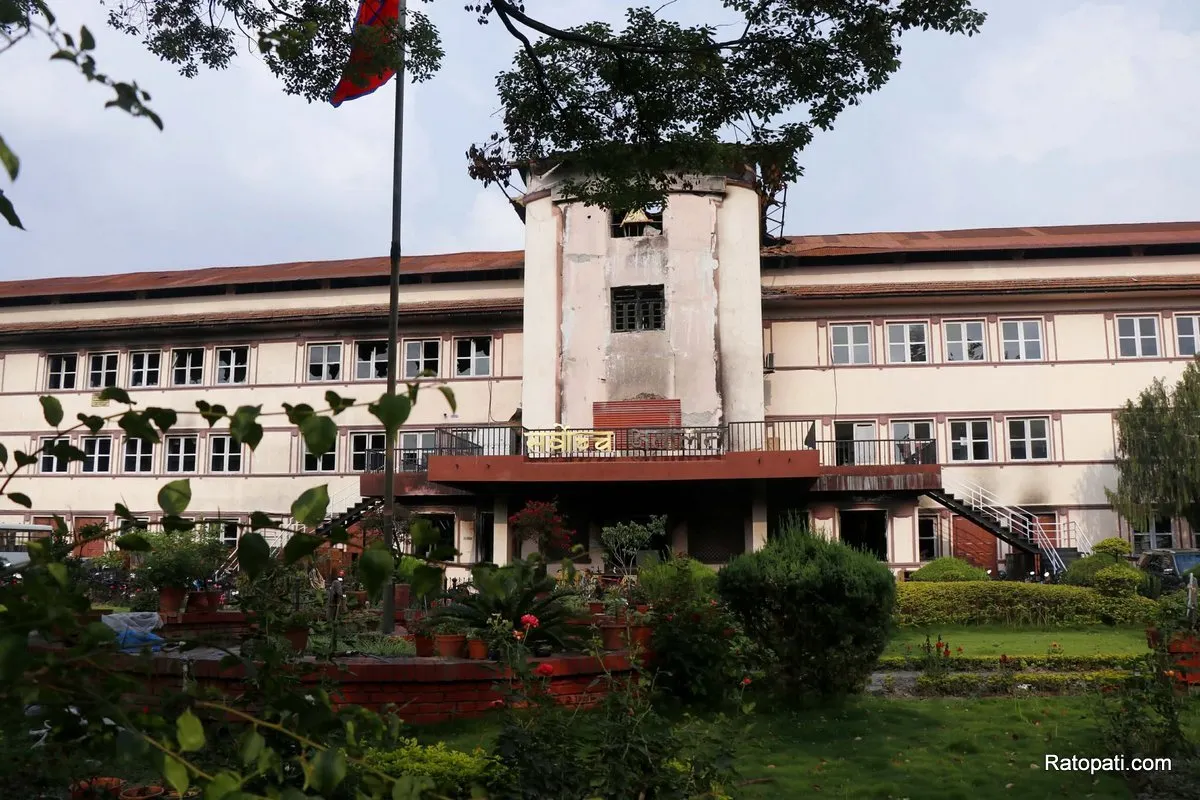
Kathmandu. The Supreme Court has issued a mandamus order in the name of the government to correct derogatory terms in official government records. In a writ filed by Gopal Bishwakarma, Chairman of Vishwakarma Ekta Samaj Nepal, the Supreme Court has ruled that individuals can write 'Vishwakarma' instead of the word 'Kami' according to their will. The joint bench of Justices Hariprasad Phuyal and Shanti Singh Thapa issued this order by interpreting the citizen's right to self-respect and self-identity. The full text of the verdict on the writ filed by petitioner Gopal Bishwakarma 5 years ago was recently made public. The Supreme Court has issued a mandamus order in the name of the government to establish the identity according to the desire of the individual without using derogatory terms in census, citizenship, and other government documents. The former Central Bureau of Statistics (now National Statistics Office) had used the word 'Kami' in the questionnaire and coding for the National Census 2078. The petitioner had demanded that the word 'Vishwakarma' be used instead, arguing that the word insults the community and promotes untouchability and discrimination. The government's argument was that both words are synonyms in the dictionary and that it would be difficult to change the code as the census preparation was in its final stages. The Supreme Court based its verdict primarily on Articles 16 (Right to Live with Dignity), 18 (Right to Equality), and 24 (Right Against Untouchability and Discrimination) of the Constitution. It has ensured the right of this historically discriminated community to be known by the honorable name of their choice. It has been stated that it is against the right to social justice and the obligation of equal treatment under Article 42 of the Constitution for the state to impose the old derogatory classification on this discriminated community. The court stated, 'The right to determine what name a person or community wants to be known by is primarily that of the community and the individual, not the state. The Great Nepali Dictionary defines Kami as a caste of blacksmiths who traditionally work with iron, Lohar, Lauhakar, Vishwakarma, while Vishwakarma is defined as a mythical deity of architecture or handicrafts, a craftsman, a worker, a blacksmith who makes iron utensils or weapons, a caste Kami.' It further stated, 'Although both definitions appear to be synonymous at a superficial level, it cannot be concluded that the social meaning, historical context, and the sense of respect or insult felt by the concerned community are equally the same for words that appear synonymous in dictionary meaning.' The verdict further states, 'It is observed that the word Kami is also understood in hateful, lustful, or contemptuous senses, and for this reason, the concerned community has been feeling disrespect towards this word. Even if it appears 'neutral' from a dictionary perspective, it is not justifiable for the state to maintain such a word as an official and permanent designation when its actual social usage causes a sense of inferiority in a community.' The Ministry of Health had sent a written response stating that there was no discrimination as the petitioner himself had filed the writ by writing Vishwakarma. However, the court stated that it cannot be assumed that systemic discrimination has ended for the entire community just because one or a few individuals have succeeded in writing Vishwakarma through personal effort. The court stated in its verdict, 'The focus of the dispute is not individual exceptions, but the institutional flaw where the word 'Kami' is established as the predetermined and standard code in the state's official record-keeping system, including census, statistics, and citizenship processes, and there is no easy, clear, and accessible alternative arrangement for those who wish to write Vishwakarma.' The court has ordered to ensure the opportunity for individuals to be represented by the name 'Vishwakarma' chosen by them voluntarily, without being compelled to be addressed as 'Kami' in government records, policies, rules, and published statistics. It has also directed to rectify the structural flaws in the census and other government record systems and to arrange for the use of dignified words instead of derogatory words in the future. A directive order has been issued to the Ministry of Home Affairs and the Ministry of Health and Population to arrange for an easy and accessible system for individuals to write their surname or caste according to their will and right to self-identity in administrative records including citizenship. The court's conclusion is that the state must take positive steps by removing derogatory terminology in accordance with all forms of international conventions on the elimination of racial discrimination ratified by Nepal. With this verdict, individuals from the Vishwakarma community, who have been written as 'Kami' in government documents for years, now have a legal path to establish their identity with self-respect. The court has also directed to send this order for implementation to bodies including the Office of the Prime Minister and Council of Ministers, the Ministry of Home Affairs, and the National Statistics Office.
स्रोतमा पूरा पढ्नुहोस् (english.ratopati.com)