
Finance Minister States Government Prioritizing Digitalization to Prevent Record Destruction
english.ratopati.com · Tue Aug 11 07:43:52 GMT 2026
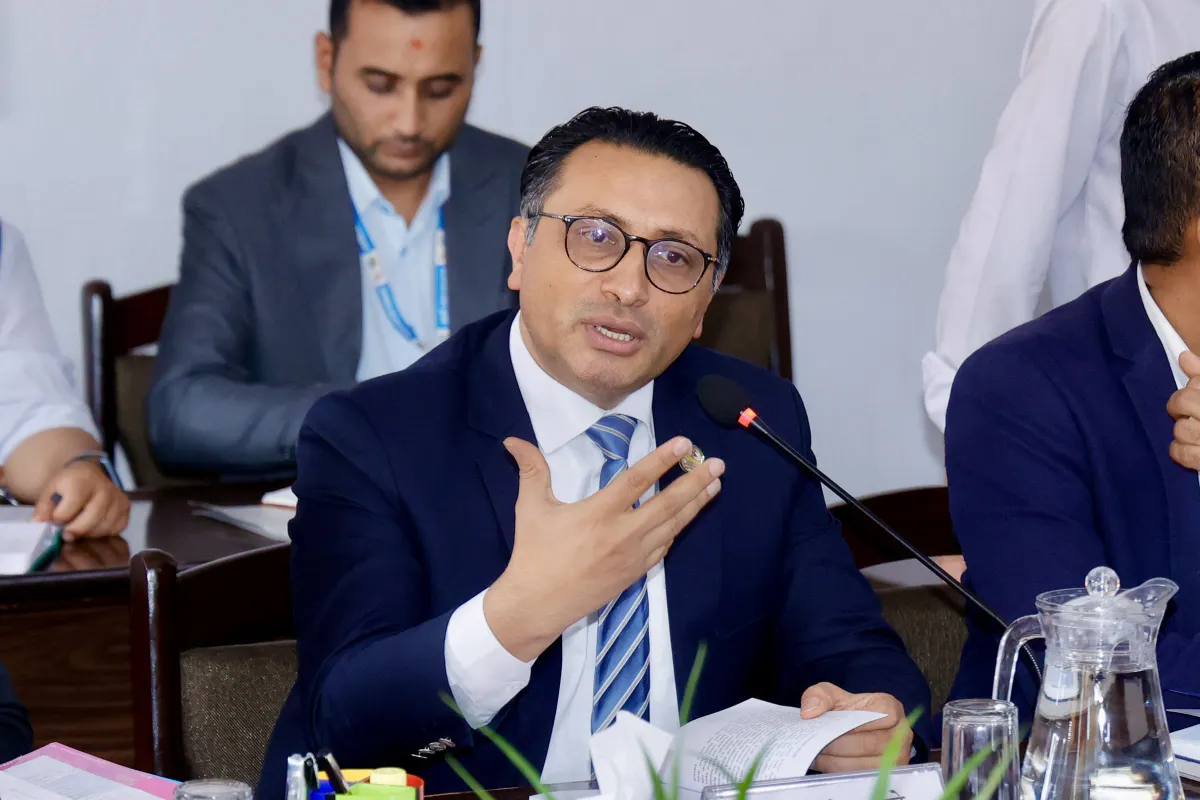
Kathmandu. Finance Minister Dr. Swarnim Wagle has stated that the government is working with digitalization as a priority to prevent the destruction of government records.
Addressing a discussion at the Public Accounts Committee regarding records destroyed due to the Jenji movement, he said that digitalization is being prioritized to prevent government records from being destroyed by such incidents in the future. He informed that the government is moving forward with securing paper records in digital form immediately and making the entire government record management system digital. In the meeting, he stated that government records were destroyed by fire during the movement on Bhadra 23 and 24, 2082. He emphasized the need to restore the damage as much as possible by using available secondary data as an alternative to destroyed primary records. He stated that even if primary data is destroyed, compensating for it with secondary data is the scientific and natural way. He clarified that amounts related to appropriation, deposit, and advance can be verified from the banking system and other available secondary data. Mentioning that the Office of the Auditor General has reported that records worth approximately one and a half trillion were burned and could not be audited, he said that current laws cover such incidents within the scope of 'force majeure', meaning circumstances beyond control or accidents. He stated that this incident should also be considered under the same law. He added that the government is ready to amend the law if the Public Accounts Committee deems it necessary. He emphasized the need to excavate, verify, and authenticate available alternative documents for the restoration of destroyed records. He stated that if there is suspicion of irregularity or misuse in government records, the Public Accounts Committee can monitor and supervise. He suggested that special monitoring can be done by conducting on-site inspections in geographical areas and government offices where significant damage has occurred. Speaking at the discussion, he said, 'The Government of Nepal does not have a very rigid position on this. We will definitely follow the committee's guidance. Until then, we will rely on Nepal's laws.' Clarifying the legal coverage of the incident, he added, 'Now, whether to call this incident of the 23rd-24th an accident or not, and whether the current law covers it or not, if the committee says, 'No, it does not cover it, it is specific, it requires a separate taxonomy,' then let's go for amendment, there is no problem. But I think, in our common language, we call it force majeure, circumstances beyond control. Defining it as force majeure, it falls within the scope of an accident.' Regarding existing laws and their application, he said, 'If we remain within that definition, the Financial Procedure and Fiscal Responsibility Act 2076 and its regulations 2077 address it to a large extent. However, if the committee feels that this is not sufficient, give instructions, and we are ready to amend the law. But whether that leads to a solution or complexity will be discussed by the committee itself.' Speaking about the use of alternative data, he said, 'Now the issues of alternative documentation have come up, excavating them, verifying them, and confirming from them. Primary data is destroyed, compensating for it as much as possible with secondary data is the scientific and natural way.' Regarding the role of monitoring and supervision, he added, 'Secondly, if there is suspicion of irregularity or misuse anywhere, the committee's role is there. It can fulfill its responsibility by monitoring, supervising, and conducting spot checks in areas and offices where there has been significant damage, keeping them under special supervision.' Regarding the long-term solution for record management, he said, 'Thirdly, the question has also arisen as to how the government is thinking about documentation and preventing such incidents in the future. I think the solution to this is digitalization. We need to digitize the entire infrastructure. He concluded by saying, 'Immediately digitize the papers in their digitized form, but to carry the entire mechanism, we must go the way of digitalization. The government is ready to proceed according to the committee's guidance. For now, we rely on existing laws, and if those laws are found to be weak or inadequate, and if there is a directive to improve them, we are ready to work on it.' He reiterated that the government will work based on the prevailing laws for now and is ready to amend them according to the committee's directives if they are found to be insufficient.
स्रोतमा पूरा पढ्नुहोस् (english.ratopati.com)