
Communist Parties Face Criticism and Call for Unity Amidst Political Crisis
english.ratopati.com · Sun Aug 23 14:45:00 GMT 2026
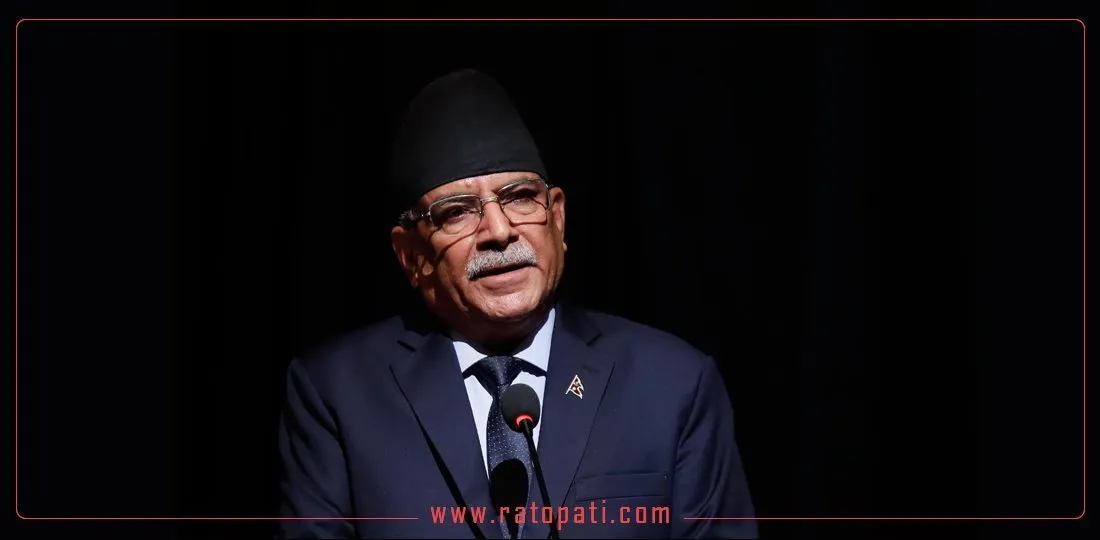
Kathmandu. The communist parties, named as communists, were most targeted in the Genji movement last August. The then coalition government led by KP Sharma Oli was accused of brutally shooting and killing 23 people during a peaceful demonstration against corruption and mismanagement on August 23. The country suffered unimaginable damage due to the destruction that occurred on August 24 against the Genji killings. At that time, the Oli-led CPN-UML, being the largest communist party in parliament, should have been held responsible for the destruction. However, the stigma fell on the foreheads of all communists. This can be confirmed by the historic setback faced by communist parties in the House of Representatives elections held in February. Communist parties, which are in a state of disintegration worldwide, have also been put on the defensive in Nepal after the Genji movement. A debate is ongoing about where the communists, who had 65 percent of the popular vote in 2065 BS, went wrong in the 18 years since the establishment of the Federal Democratic Republic. There is a strong demand within UML and the Nepali Communist Party for Oli and Prachanda to take moral responsibility for the electoral defeat. Transformation advocates in both these parties are increasing pressure on the leadership by demanding party restructuring. Oli and Prachanda, who are facing pressure within their parties, are increasingly in dispute over agreeing to a proposal for power-sharing in the provinces without self-criticism and serious review of past mistakes. Fundamentally, emphasis is being placed on Oli and Prachanda to pave the way for restructuring the communist movement and reorganizing the party. Communists have concluded that the weakened party organization cannot move forward by retrofitting. It is being discussed in political circles that if the same mistakes are repeated, no one will be able to prevent the dissolution of the communist movement in Nepal. Former Prime Minister and CPN coordinator Prachanda specifically admitted that he made mistakes after the establishment of the Federal Democratic Republic in 2065 BS. Speaking at a program in Kathmandu on Sunday, Prachanda said that the communist movement has weakened due to being entangled in the cycle of forming and breaking power alliances. 'We got too entangled in tactics, forming and breaking power alliances became the focal point of the work. Yesterday, during the people's war, there was a strategy to defeat feudalism,' Prachanda said. 'While we were successful in the people's war by making tactics to achieve that, we got caught in a cycle by making strategy into tactics and tactics into strategy. But the opponents had made strategies to destroy communists, and we failed in that.' Defending the three-point agreement with UML and CPN Masal, Prachanda asserted that the objective is to reunite the communist movement and advance the socialist movement. He appealed to all communists, patriotic forces to be ready for the movement as the country is facing its greatest crisis since the Sugauli Treaty. Former minister and UML leader Pradip Gyawali emphasized the need for communist forces to unite as the nation is in crisis. He presented five bases for cooperation and unity among communists. First basis: Protection of nationality. He clarified that all communist, communist, and patriotic forces can unite to protect the nationality as the country is at risk of diplomatic disaster. Second basis: Protection of the constitution. He accused the government of trying to dismantle the constitution achieved through long struggle, sacrifice, and martyrdom. Gyawali argued that if the constitution is tampered with, a major movement could occur, and the government would not be able to bear its consequences. Third basis: Protection of democracy. He accused the government of trying to push the current open environment towards contraction. Gyawali said that unity can be achieved for its protection. Fourth basis: Livelihood. He stated that the problem of livelihood is serious today. Urban consumers are in dire straits due to the lack of gas, and there are many other issues including landless squatters. Gyawali questioned the relevance of communists if they do not get involved in these issues. Fifth basis: Protection of social harmony. Gyawali accused that attempts are being made to push society towards ethnic and linguistic conflict to displace political parties. He said that anarchists are working to bring such things forward if politics weakens. Nepal Communist Party coordinator Uma Bhujel emphasized the need for unity and cooperation among all communist parties as the country is in crisis. She urged for unity to protect the nationality as communist forces are currently in a defensive position. 'Communists, who were 65 percent, have fallen to 21 percent. National and international forces are trying to finish the communist party. To save the movement, which is in a do-or-die situation, all communist parties must unite and cooperate,' she said. CPN majority leader Gunaraj Lohani clarified that he is ready for party unity if the past weaknesses are truly accepted. 'If he (Prachanda) has sincerely accepted past mistakes, we are ready for party unity. There are slips of the tongue in his words. We are ready to accept Prachanda as a leader if he leaves his luxurious palace and becomes a proletariat,' he said. At the program, CPN Masal spokesperson Ramrakash Puri and Revolutionary Communist Party politburo member Rambahadur Buda emphasized the need for serious review of past mistakes and unity and cooperation among communists.
स्रोतमा पूरा पढ्नुहोस् (english.ratopati.com)