
Youth Activists Demand Youth-Centric Financial Fund in Climate Policy
english.ratopati.com · Tue Aug 04 06:38:48 GMT 2026
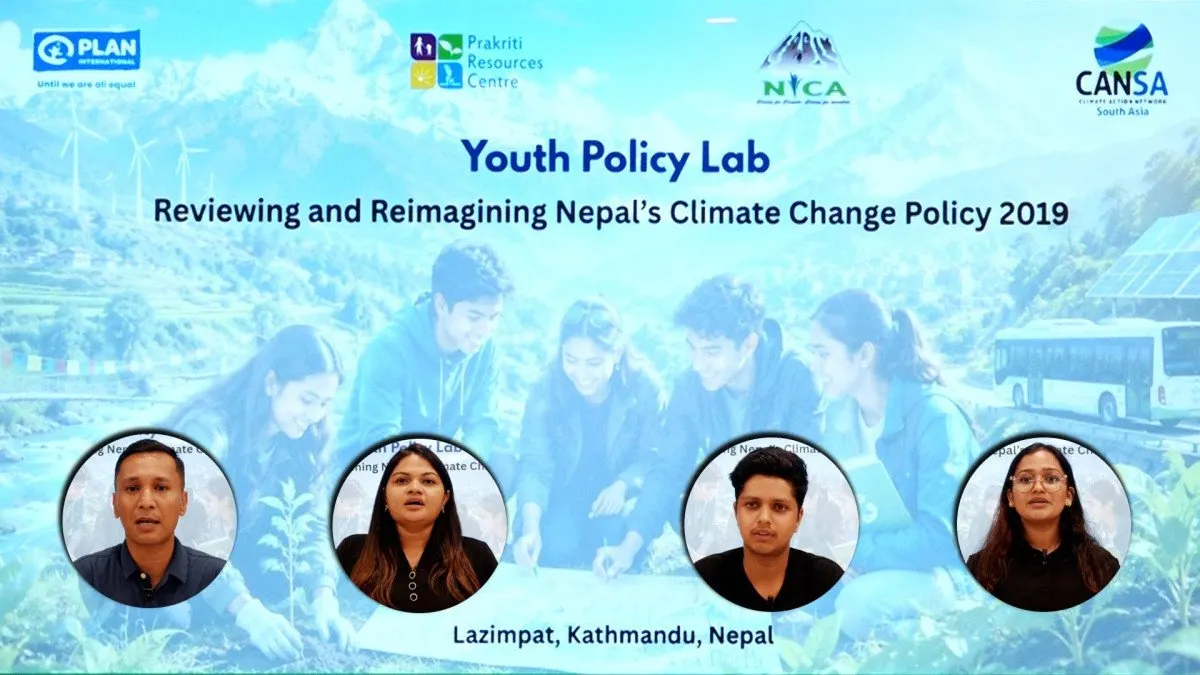
Kathmandu. Youth activists involved in climate action have demanded the provision of a separate youth-centric financial fund in climate policy. While the government is preparing to amend the Climate Change Policy-2019, the youth have stated that they should be established not just as participants or beneficiaries, but as decision-makers in policy formulation and implementation. Youth climate activists participating in a program organized by the Center for Natural Resources in Kathmandu demanded that the direct participation of youth in the decision-making process be ensured. Akriti Dotel, National Coordinator of the Youth Network for Climate in Nepal, demanded that a separate institutional mechanism for youth be provisioned in the policy itself. She stated that since the government did not fully implement the suggestions received from the youth during the preparation of the Third NDC, it is necessary to include a separate financial arrangement in the policy to promote youth participation, along with the missed issues. 'We had proposed the concept of Climate Champions in all 753 local levels,' Dotel said, 'This is a positive proposal from the perspective of conducting climate change-related activities at the local level, promoting climate entrepreneurship, and supporting other youth.' She mentioned that among the many suggestions they provided, they feel one important issue is still missing. She stated that there is a lack of an institutional mechanism where youth can regularly voice their opinions and suggestions. She pointed out that when reviewing the Climate Change Policy-2019, youth were mentioned only in three places, and therefore, youth should be involved at the policy-making table, not just as observers. 'We have not demanded the Green Climate Fund itself,' she added, 'but if a separate fund is arranged through grants, internships, research, and other programs for youth at the local, provincial, and federal levels, it will help in building climate resilience.' Another climate activist, Diksha Subedi, demanded that specific sectoral targets for youth be clearly mentioned in the climate policy. She emphasized that the policy should clarify how much resources will be allocated for youth from various climate financing mechanisms. 'The issue of setting separate sectoral targets for youth in the amendment process of the climate change policy is still not adequately covered,' Subedi said, 'It is not clear how much percentage of resources will be allocated for youth from funds like the Green Climate Fund and how youth-targeted financial mechanisms will operate.' She stated that the government still primarily views youth as beneficiaries. She suggested that a separate chapter for children and youth, promotion of innovation, and clear provisions regarding climate finance and youth-targeted programs should be included in the new policy. Another youth climate activist, Ataldev Dhakal, emphasized that youth should be established in the policy as active change-makers, not passive beneficiaries. 'Youth and children are still seen as passive beneficiaries in climate change-related policies and programs,' Dhakal said, 'Now, this perspective needs to be changed, and they need to be established as active agents of change and partners in the decision-making process.' Santakumar Maharjan, Program Manager at the Center for Natural Resources, informed that suggestions have been received to create a basis for bringing youth into the decision-making process and giving them a leading role in implementation, as the Climate Change Policy-2019 limited youth only to participation. He stated that the received suggestions will be integrated and handed over to the government. 'The role of youth should not be limited only to participation,' Maharjan said, 'It is necessary to ensure opportunities for them to participate in decision-making, lead, and play a direct role in policy implementation.' He said that if the experiences, needs, and suggestions of the youth are included in the policy, the policy can become more effective, inclusive, and practical. The youth participating in the program jointly suggested the need for institutional representation of youth in the climate policy, a separate climate financial arrangement, support for research and innovation, and the creation of effective youth mechanisms from local to federal levels.
स्रोतमा पूरा पढ्नुहोस् (english.ratopati.com)