
Automobile Businessman Akash Golchha States Battery Recycling Cannot Be Handled Solely by Vehicle Importers
english.ratopati.com · Fri Aug 14 12:01:05 GMT 2026
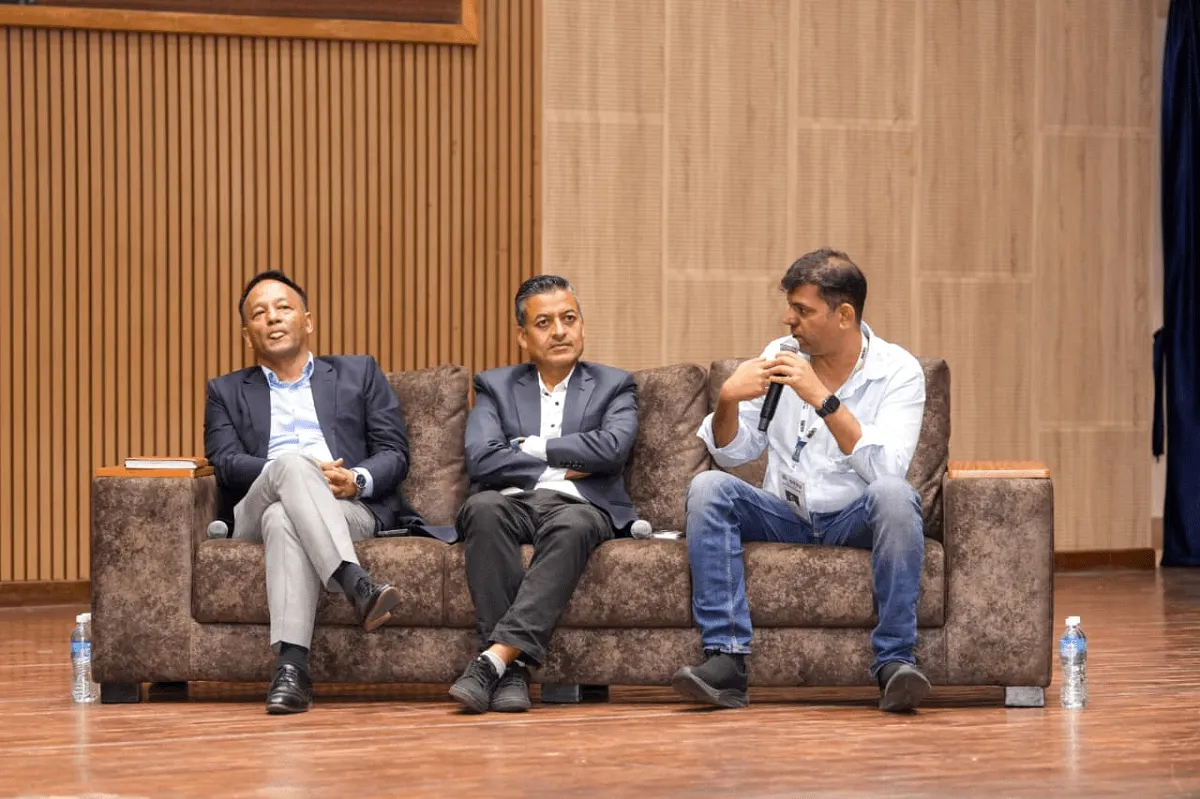
Kathmandu. Automobile businessman and founder of NAIMA, Akash Golchha, has stated that vehicle importers alone cannot handle battery management recycling work in Nepal. Speaking at the ‘Battery Recycle and Ethanol Blending in Fuel’ dialogue organized by the Nepal Automobiles Importers and Manufacturers Association (NAIMA) on Friday, he cited India's example and said that importers alone cannot do it and a separate company is needed for it. He mentioned that battery management is necessary not only for EVs but also for devices like mobile phones and laptops. He also stated that the lack of clear legal provisions for battery management and Nepal's open border with India have become challenges for battery management. 'In Nepal, not only for EVs, but the management of batteries used in devices like mobile phones and laptops has become a big challenge today,' he said. 'Currently, there is no systematic system for this. There is no law. Even the government does not have complete information about its actual situation.' He said that most old batteries of mobile phones and laptops are currently being taken to India, or thrown into rivers and landfills. He stated that the management of traditional lead-acid batteries and modern lithium batteries is different, and management policies should be made accordingly. He said that since lead-acid batteries are getting a good price currently, they are not being thrown into landfills. 'The situation is different in the case of lithium batteries. According to current rules, vehicle importers have to be responsible for battery management. Currently, only batteries with warranty are returned with the importers,' he said. 'There is no legal clarity on who is responsible if a battery is discarded after a vehicle accident. The government may hold importers responsible or fine them, even though batteries from vehicles damaged by accidents or other reasons are not always with the import. It is also under the customer's control. The customer can do whatever they want with it.' He said that the government should make clear policy arrangements to solve this problem. He said that a system should be created where the responsibility lies not only with the importers but with the government, consumers, and all stakeholders. He also said that there is a problem in exporting batteries from Nepal currently. 'Currently, there is a provision for a certain price to export batteries from Nepal. But battery importers are mostly taking batteries at zero cost. If batteries fetch a proper price when exported, batteries can be prevented from going to the grey market,' he said. For this, clear legal provisions are essential. He said that currently, lead-acid batteries are exported to India without being subject to tax. He said that since the government provides a rebate of Rs 2 to Rs 5 per kg for battery recycling in India, a similar policy should be adopted in Nepal. For the recycling of lithium-ion batteries in Nepal, some different processes are required. He said that after collecting batteries, raw materials like plastic, copper, and aluminum from the batteries can be separated and sold. 'In the absence of complete infrastructure for battery recycling in Nepal, black mass can be exported to India, which can add value,' he said. 'However, the government should create clear rules and laws rather than making this mandatory.' He said that if the government starts adopting strict rules for battery management, it will create problems like in the steel industry. He reminded that in India too, battery management is done by separate companies, not by importers. He said that the government should legally assign the responsibility of collection and processing only to licensed recyclers.
स्रोतमा पूरा पढ्नुहोस् (english.ratopati.com)