
NP Saud Proposes Review of Party's Current Crisis and Future Direction at National Convention
english.ratopati.com · Sat Aug 15 09:39:37 GMT 2026
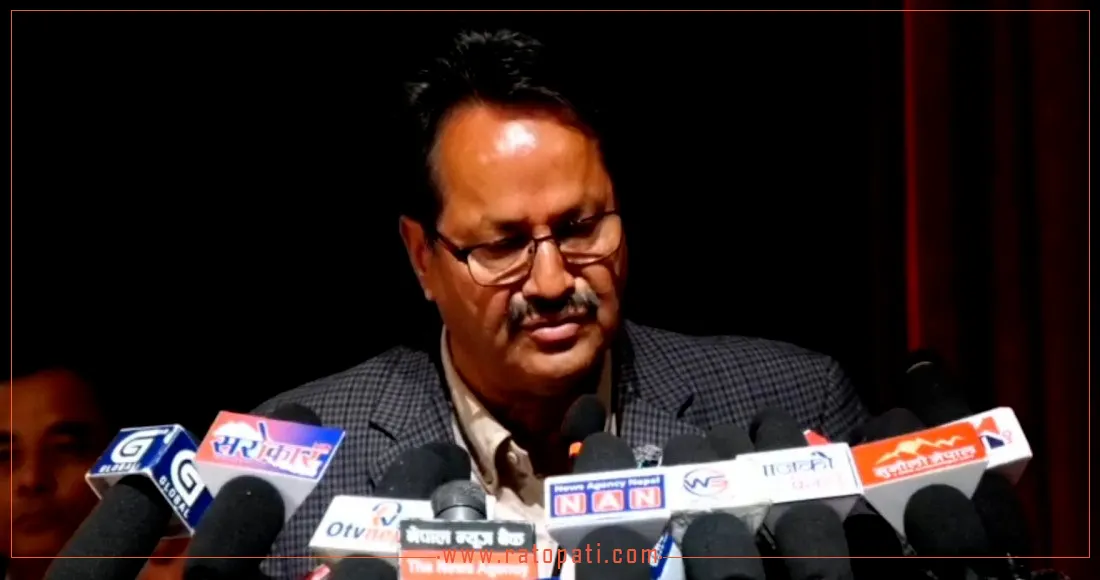
Kathmandu. The 'Proposal on Contemporary Issues of the Country' presented at the national convention of the Nepali Congress has seriously reviewed the party's current crisis, general convention disputes, and future direction. The document, presented by NP Saud, coordinator of the proposal preparation committee, highlighted the need to transform the party into a modern, accountable, and ideologically focused political force by freeing it from factionalism and traditional styles. Saud clarified that at this complex juncture, the existence of both democracy and Congress is intertwined, and the main need for Congress today is to win the trust of the people rather than defeat anyone. The contemporary proposal specifically dissects the situation after the collapse of the ruling coalition on February 21 and its impact on Congress. It is acknowledged that despite becoming the largest party in the 2079 elections, Congress had to form governments by allying with either Maoists or UML due to the lack of a clear majority, which weakened the opposition. Saud emphasized the need for a ruthless review of the defeat, stating that the party, with its 80-year struggle-filled history, has reached a historically weak state. The proposal states, 'Self-reflection is not just about blaming a person, faction, or situation for the defeat, but about honestly seeking an answer to where we faltered.' It further adds, 'The practice of sidelining one faction instead of ruthlessly reviewing the defeat will only weaken Congress further.' Congress has also seriously analyzed the dissatisfaction seen among the youth and the 'Gen Z' protests. Saud stated that public dissatisfaction has increased due to corruption in state mechanisms, misgovernance, and the government's lack of accountability. However, he termed the arson and vandalism that occurred on August 24 at the Congress central office, offices in 48 districts, the residences of BP Koirala and Ganesh Man Singh, and leaders' homes in the name of protest as planned. Demanding an independent investigation into such destructive incidents, Saud questioned the infiltration of the movement and the state's silence. He also warned that the 'Gen-Z' movement, by promoting an ultra-anarchist tendency that declares democratic institutions and norms a failure, poses a risk of creating a new kind of instability. The proposal has deemed the long-standing 'special general convention' dispute within the party as illegal. Saud recalled that the central committee, concluding that demanding a special general convention on the eve of elections would create instability within the party, had unanimously decided to hold a 'regular general convention.' He argued that only the central committee has the authority to call a special general convention according to the statute, and that personal calls by individuals or office-bearers would create organizational chaos. The proposal states, 'The special general convention was illegal from a legal standpoint, and therefore it did not receive legal recognition from the Election Commission and the court.' 'Now, this dispute within Congress should not be limited to a question of victory or defeat. While the court can determine legal validity, dialogue is necessary to build political trust and organizational unity.' Saud claimed that Sher Bahadur Deuba, as party president, had advanced the leadership handover process in a manner consistent with the statute. He reminded that Deuba had handed over acting presidency to Purna Bahadur Khadka on October 28, 2082, and had announced that he would formally hand over party leadership from the upcoming 15th general convention. 'Generational transfer is not generational exclusion,' Saud said. 'Leadership must be built by connecting experience with energy, tradition with novelty, and history with the future.' Congress has also commented on the government's style of functioning. The proposal concludes that the current government, formed with nearly a two-thirds majority, remains in uncertainty, and Prime Minister KP Sharma Oli's solitary approach has distanced him from both parliament and the party. Congress has put forward policies such as developing the private sector as a partner in investment, production, and job creation within the rule of law, maintaining zero tolerance for crime, and creating opportunities within Nepal to prevent youth from going abroad. Finally, Saud clarified that Congress's future journey should be a transformation from a 'traditional electoral party to a modern, democratic, and policy-based party.' He believes the party's organization should be fully digital, youth should be partners in policy-making, not just street protests, and all segments of society should be included. 'The renaissance of the Nepali Congress will not happen through the victory of one person or the defeat of another,' Saud said in the conclusion of the proposal. 'The true renaissance of Congress will only be possible through the renaissance of ideas, the reconstruction of institutions, the democratization of leadership, and the restoration of trust in the people.'
स्रोतमा पूरा पढ्नुहोस् (english.ratopati.com)