
Government Faces Criticism for Delays in Power Purchase Agreements
english.ratopati.com · Mon Aug 17 00:15:00 GMT 2026
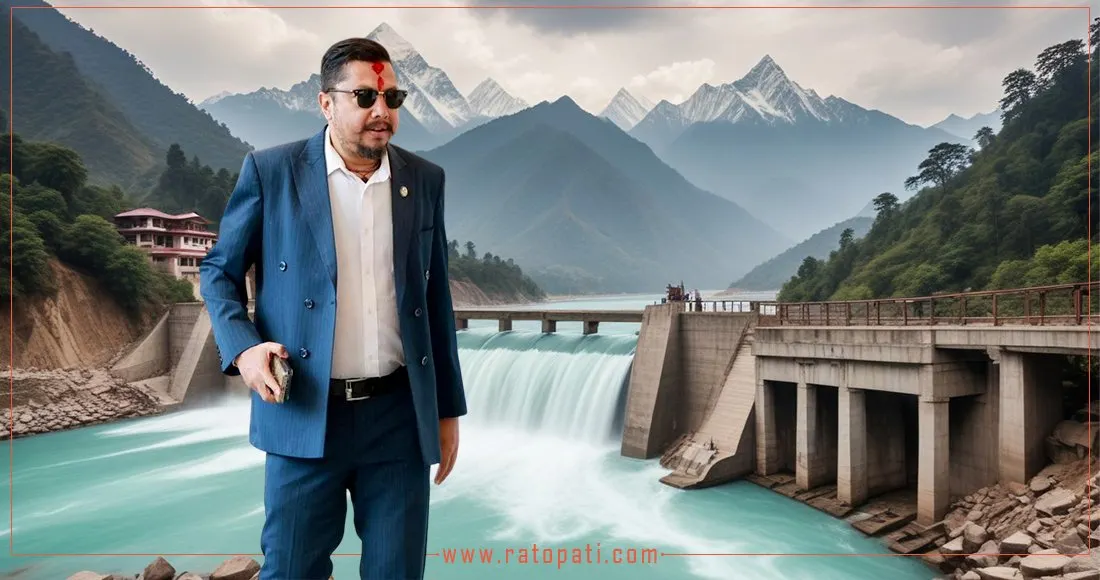
Kathmandu. The government has caused extreme delays in the Power Purchase Agreement (PPA) of hydropower projects. Energy promoters who were hopeful that the stalled and new PPA processes would gain momentum with the formation of the current government are now disappointed. Although more than four and a half months have passed since the government was formed, neither new nor old PPA processes have moved forward. The Rastriya Swatantra Party (RSP) had pledged in its election manifesto to immediately resolve problems in the hydropower sector and expedite PPA approvals. The government, led by Balen Shah, has completed four months in office, claiming to implement that commitment. However, the government's commitment to conclude the PPA process within 180 days remains confined to paper. The 994th meeting of the Nepal Electricity Authority (NEA) board of directors had decided to PPA 54 projects with a capacity of 4,966 megawatts that had signed grid connection agreements by Chaitra 12, 2081. Accordingly, the NEA issued a notice asking for the necessary documents within 35 days. However, the notice directed 54 projects to submit all details within 4 days. Energy entrepreneurs felt some relief when the NEA moved forward with the PPA process. The NEA, by mentioning the names of the producing companies in a public notice, sought details, and energy producers submitted all documents within the stipulated short period. However, the NEA, which showed haste by demanding details within 4 days, has not advanced the process even after 400 days (15 months) have passed since receiving the details. Due to the non-implementation of the government's commitment, the electricity of 16,500 megawatts from 281 projects and billions in private investment have been at risk for the past three years. Lack of coordination between the NEA and the ministry has caused deep disappointment in the energy sector. The government has set a target of producing 28,500 megawatts of electricity by 2035 but has not shown commensurate diligence. Finance Minister Bishnu Poudel had announced in the budget for fiscal year 2081/082 that PPAs for run-of-river projects would be done under the 'take and pay' policy. Although the parliament passed the budget by withdrawing that provision, private promoters have been in trouble as the NEA has not been doing PPAs. Although the RSP-led government was expected to facilitate by removing policy uncertainties, the energy sector has become alarmed as the government has adopted a strategy to further tighten PPAs instead of facilitating them. The government has an ambitious plan to produce 30,000 megawatts by 2035, with 15,000 megawatts for domestic consumption and the rest for export. However, the PPA files, which are the basis for this plan, are stuck in the drawers of the NEA and the Ministry of Energy. Prakash Dulal, Vice-President of the Independent Power Producers' Association Nepal (IPPAN), says, 'The government's working style of asking for documents within 4 days but not making a decision for 400 days has demoralized investors.' He stated that the NEA's failure to do PPAs despite issuing notices has made the private sector suspicious. IPPAN Chairman Mohan Dangi also said that the NEA's inability to implement its own notice for 15 months confirms the state's insensitivity. 'Businesses that have invested billions are in great trouble. Demanding details in 4 days and remaining unaware for 15 months raises questions about the government's intentions,' he said. The notice issued by the Electricity Trade Department on Jestha 25, 2082, had created a stir in the hydropower sector. It asked 54 projects that had signed grid connection agreements to provide all necessary documents for PPA within 4 days. The NEA, citing the implementation of the decision of the 994th meeting of the NEA board of directors, had sought details of national parks, reserved areas, production permits, financial closure, and environmental study progress. Promoters who had been waiting for the PPA for a long time prepared the documents overnight. Some chartered helicopters to take photos of the site, while others worked their staff overnight to submit the files. However, they have been receiving the response that the process is still under study even after 15 months have passed. NEA Acting Executive Director Dirghayu Kumar Shrestha admitted that the PPA process for the 54 projects is currently under study. He said that homework is being done as it is a process from before he took charge. According to Shrestha, discussions are underway regarding canceling the applications of projects that do not meet the criteria or complete the process and moving forward in a new way. Similarly, NEA board member Anshu Kiran Shahi also informed that discussions are ongoing regarding how to proceed with old PPAs and a decision will be reached soon. Timeline of PPA process for 54 projects: Chaitra 12, 2081: The 994th meeting of the NEA board of directors held on Chaitra 12, 2081, decided to open electricity purchase agreements (PPAs) for 54 hydropower projects with a total capacity of 4,966 megawatts. To implement that decision, on Baishakh 30, 2082, the NEA published the list of projects and conditions, seeking 13 necessary documents from the promoters and issuing a public notice. The NEA's list included projects such as Upper Arun (1061 MW), Fukot Karnali (480 MW), Betan Karnali (442 MW), Chainpur Seti (210 MW), Surke Dudhkoshi (188 MW), Sagarmatha Hydro (171 MW), and Urja Developers (166 MW), among 54 projects. Jestha 25, 2082: In accordance with the decision of Chaitra 12, 2081, the NEA, citing a management decision on Jestha 2, 2082, to advance the PPA process with projects that submitted documents, corresponded with the promoter companies, mentioning their names, and asked for additional necessary documents and details within 4 days. Although the promoters hastily submitted the documents, no concrete progress has been made even after 15 months (more than 400 days) have passed since then. Criteria also prepared: The NEA had set the PPA criteria based on 'Connection Agreements' on Chaitra 12, 2081. Similarly, as per the decision of the board of directors meeting on Baishakh 31, 2082, a criterion was set to prioritize PPA based on 'non-overloading condition' and 'N-1 contingency'. According to that criterion, projects like 'Eastern Energy' (25 MW) connecting to the Koshi Corridor were given first priority, and projects like Simbuwa (40 MW) were given second priority. However, despite demanding all documents and setting priorities, the process has not moved forward. Effort to open PPA when Kulman was Energy Minister: Kulman Ghising had made efforts to open PPAs when he was the Energy Minister. However, the NEA stated that the process was halted due to the policy taken by the then government on PPAs. Then Finance Minister Bishnu Prasad Poudel adopted the 'take and pay' policy in the budget for fiscal year 2082/83. Due to widespread opposition to that policy, he had pledged to amend it through parliament. Although an amendment was announced in parliament, the old system remained in the red book, and the NEA stated that it could not advance the PPA. The budget statement of last year, point 227, stated: 'Substations and transmission lines will be constructed in coordination with the completion schedule of hydropower projects. A policy of entering into electricity purchase agreements in a manner that balances electricity production and consumption will be adopted. Electricity purchase agreements will be made in accordance with the 'take and pay' concept for run-of-river projects.' Then Finance Minister Poudel had amended the provision, stating that the government's responsibility would be to ensure that produced electricity is not wasted, minimize the risk of banking investment, prioritize investment in reservoir and semi-reservoir projects, and meet the demand during the dry season. However, despite the amendment with explanations, PPAs remained stalled for a year due to the same policy. When he was the Energy Minister, Kulman Ghising made significant efforts to open PPAs. The NEA had also sought an opinion from the Ministry of Finance on this matter. The Ministry of Finance, by a ministerial decision on Poush 24, 2082, agreed to send a proposal to the cabinet to sign agreements on 'take or pay' instead of 'take and pay' with projects that had been waiting for PPAs for a long time. The Ministry's opinion was that the relevant ministry (Energy) and the Electricity Authority were competent to enter into PPAs according to the prevailing law. However, due to Kulman's resignation on Poush 23, that decision could not be implemented, and the PPA process was obstructed again. Government's 180-day action plan: With the formation of the current government, a decision was made on Chaitra 13 to decide on all stalled PPAs and licenses within 180 days under point 74 (b) of governance reforms. This point, under the 101 agendas approved by the Council of Ministers, states that pending PPA and license decisions must be made within a maximum of 180 days. However, even as this deadline approaches, no concrete results are visible. Only about a month is left, but there is still no sign of the process moving forward. Government's commitment on one side, work on the other: Although the government announced that pending PPAs would be completed within 180 days, work has not been done accordingly. Energy, Water Resources and Irrigation Minister Biraj Bhakta Shrestha formed a committee to study PPA issues. The committee, which did not have private sector representation, has submitted its report to the minister, which indicates a policy of further tightening PPAs. Although the budget announced immediate PPAs for projects up to 10 megawatts on a 'take and pay' basis, the government has remained silent on the 54 projects with a capacity of 5,000 megawatts that the NEA had previously intended to PPA. The high-level committee formed by the ministry has recommended canceling the licenses of 38 hydropower projects with a capacity of 1,388 megawatts that had PPAs but did not proceed with construction. Based on that recommendation, Energy Minister Shrestha stated that the 'license raj' that has persisted in the energy sector for years would be ended and the practice of hoarding projects would be discouraged. He clarified that those who keep 'rivers in their bags' would be dealt with strictly, and only genuine investors would be given opportunities. However, private entrepreneurs have accused the government of obstructing their work by withholding PPAs and, instead, defaming the private sector by talking about license cancellations. This also seems to leave the government's goal of producing 30,000 megawatts in 10 years in limbo. PPA for 10 MW opened, uncertainty remains for large projects: The government has arranged to immediately open PPAs for small hydropower projects up to 10 megawatts through the budget. The NEA had decided in February 2080 to open PPAs for such small projects and abolish the quota system. However, energy producers are concerned about the future of large projects above 10 megawatts. Currently, projects with a capacity of about 16,000 megawatts are waiting for PPAs, of which the capacity of projects up to 10 megawatts is only about 1,000 to 1,200 megawatts. IPPAN Vice-President Dulal said that billions in investment are at risk due to the delay in the PPA process. He said, 'We are not asking for money, we are asking for work. The entire energy sector is on the verge of collapse due to the government halting the process.' Future of 16,000 MW in uncertainty: The total capacity of the 54 projects that the NEA sought to open PPAs for is 4,966 megawatts. This includes 38 run-of-river projects with a capacity of 1,859 megawatts and 16 semi-reservoir projects with a capacity of 3,107 megawatts. The total number of projects waiting for PPA has reached 281, with a capacity of more than 16,500 megawatts. Due to the lack of PPA despite having signed grid connection agreements, these projects cannot obtain bank loans nor can they proceed with construction. Promoters have spent millions of rupees on obtaining licenses, environmental assessments, and land acquisition. 'Banks do not provide loans without PPA, but the interest meter keeps ticking,' complained Vice-President Dulal. If PPAs are not done on time, many promoters will go bankrupt, and this will have a direct impact on banks and financial institutions. What does the NEA say?: NEA Acting Executive Director Dirgharaj Shrestha said that homework is being intensified regarding the PPA limit for other large projects, prioritizing projects up to 10 megawatts. He said that the technical aspects of small projects are being studied and a conclusion will be reached soon. Similarly, board member Anshu Kiran Shahi informed that the file has been sent to the Ministry of Finance to seek an opinion on the impact of the NEA's financial condition and the 'take or pay' provision on PPAs. He stated that further process will proceed only with the consent of the finance ministry and coordination with the energy ministry.
स्रोतमा पूरा पढ्नुहोस् (english.ratopati.com)